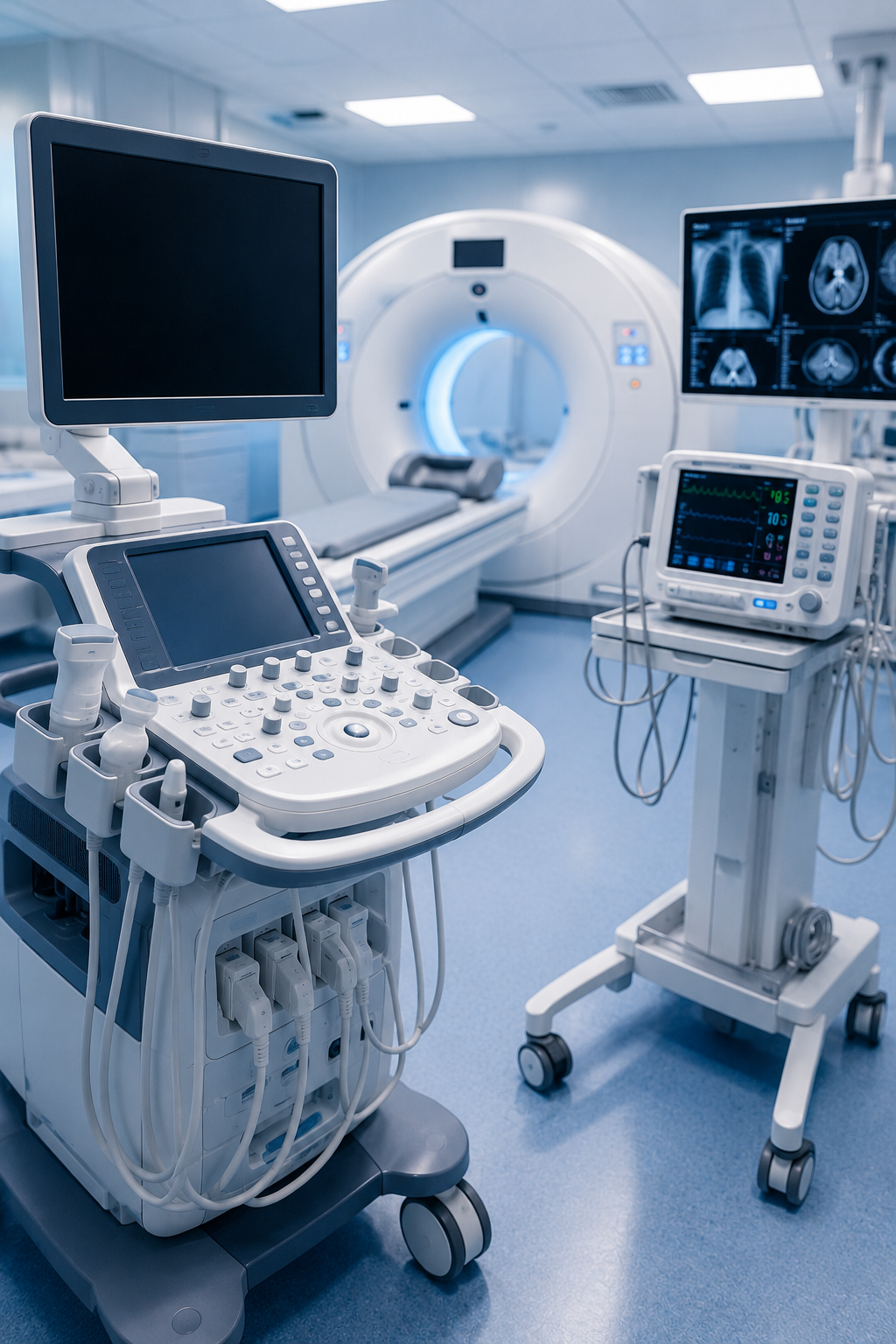
Modern diagnostic devices play an important role in improving healthcare quality because they give medical teams a clearer and faster understanding of patient conditions. In healthcare environments where time and accuracy matter, clinical decisions are not based only on experience or observation. They also depend on the availability of tools that provide better insight into the patient’s status. That is why diagnostic equipment has become a central part of efficient work in hospitals, clinics, and healthcare centers.
In recent years, diagnostic technology has advanced significantly. Devices have become more accurate, easier to use, and faster in presenting results or key indicators. This progress does not only improve the examination process itself. It also improves the way medical decisions are made, whether during initial assessment, follow-up care, or decisions about further intervention. That is why understanding the impact of modern diagnostic devices is important for daily clinical performance.
Rabiyah Medical supports healthcare providers by supplying medical equipment and consumables that help strengthen clinical efficiency and support care environments that require clearer diagnostic insight and better follow-up.
Why Modern Diagnostic Devices Matter
Better medical decisions require better information. The more effectively a device can provide clear and timely indicators, the stronger and more reliable the clinical decision becomes.
Modern diagnostic devices support accuracy
One of the most important roles of modern diagnostic devices is improving the accuracy of assessment. When readings, images, or indicators are clearer, uncertainty becomes lower and the next clinical steps become easier to define.
Modern diagnostic devices speed up evaluation
In many situations, time has a major impact. Devices that help generate results more quickly support healthcare teams in responding with greater efficiency.
Modern diagnostic devices improve confidence
When care teams rely on equipment that is dependable and clear in performance, confidence in the information increases, and so does confidence in the decision based on it.
How Modern Diagnostic Devices Affect Medical Decisions
The impact of these tools goes beyond diagnosis alone. They influence how the condition is understood and how treatment priorities are set.
Modern diagnostic devices provide clearer insight
The clearer the information becomes, the more a medical decision can be based on actual data rather than limited estimation. This helps physicians and clinical teams choose the right direction more efficiently.
Modern diagnostic devices support follow-up
Some decisions are not made once. They need ongoing review. Here, modern diagnostic devices help by showing changes over time and supporting reassessment when needed.
Modern diagnostic devices reduce delay
When results become available faster, the time between assessment and action becomes shorter. This can support monitoring, referral, treatment, or additional intervention more effectively.
Examples of the Role of Modern Diagnostic Devices
The exact devices used depend on the facility type and the services it provides, but their effect can be seen across many departments and specialties.
Initial assessment devices
Equipment used for basic measurements or quick evaluation helps create an early understanding of the patient’s condition, which supports faster decisions in the next steps.
Advanced imaging and evaluation tools
In settings that rely on more advanced testing or imaging, modern diagnostic devices help support deeper understanding of the condition and more precise clinical direction.
Monitoring and follow-up devices
Devices that provide repeated or ongoing indicators help healthcare teams make decisions based on real changes in the patient’s condition instead of relying on a single point of information.
How These Devices Improve Team Efficiency
The benefits of these tools are not limited to physicians alone. They support the wider healthcare system inside the facility.
Modern diagnostic devices improve coordination
When information becomes clearer and faster to access, coordination between departments and clinical teams becomes easier, especially when a case requires follow-up from multiple sides.
Modern diagnostic devices reduce confusion
Clearer data helps reduce hesitation and lowers the need to repeat steps because of missing information. This supports smoother daily workflow.
Modern diagnostic devices support faster response
The sooner the indicators are available, the faster the next step can be taken, which improves the handling of different types of cases.
The Effect of Modern Diagnostic Devices on the Patient Experience
The improvement is not only internal. It also affects the patient through greater clarity, faster service, and a stronger overall impression of care.
Diagnostic devices reduce waiting time
When information becomes available more quickly, some waiting periods linked to assessment or repeated testing can be reduced, which makes the care journey smoother.
Diagnostic devices build confidence
Patients often feel more reassured when the examination process appears organized and when the diagnostic environment reflects modern and dependable care.
Diagnostic devices support care quality
Any step that improves understanding, saves time, or guides decision-making more effectively will ultimately improve the quality of the care experience.
What Healthcare Providers Look for in Modern Diagnostic Devices
Healthcare organizations are not only looking for new equipment. They want practical solutions that help improve performance and support better decisions.
Diagnostic devices with ease of use
Ease of use matters greatly because no matter how advanced the device is, it must still support daily work without adding unnecessary complexity.
Diagnostic devices with dependable results
A strong device is one that supports consistent confidence in its results or indicators, because these are the basis of sound clinical decision-making.
Diagnostic devices with operational value
Healthcare providers also value equipment that improves workflow, not just devices that provide an image or a reading, but tools that support the care environment more broadly.
Why Healthcare Providers Choose Rabiyah Medical
Rabiyah understands that modern diagnostic devices have become an important part of improving care quality and strengthening medical decision-making inside healthcare facilities. That is why the company supports hospitals, clinics, and medical centers by supplying equipment and consumables that help improve diagnostic clarity and clinical efficiency.
For healthcare providers seeking practical and dependable solutions, working with a partner that understands the market and its needs helps support better equipment choices and a more confident care environment.
Final Thoughts
Modern diagnostic devices help improve medical decision-making in direct and practical ways. They strengthen accuracy, speed up access to key information, support follow-up, and improve coordination inside the healthcare facility. The clearer and more dependable the diagnostic tools are, the stronger and more stable the clinical decisions become.
With a trusted partner such as Rabiyah Medical, healthcare providers can choose the right equipment to improve diagnostic quality and support more efficient daily care.