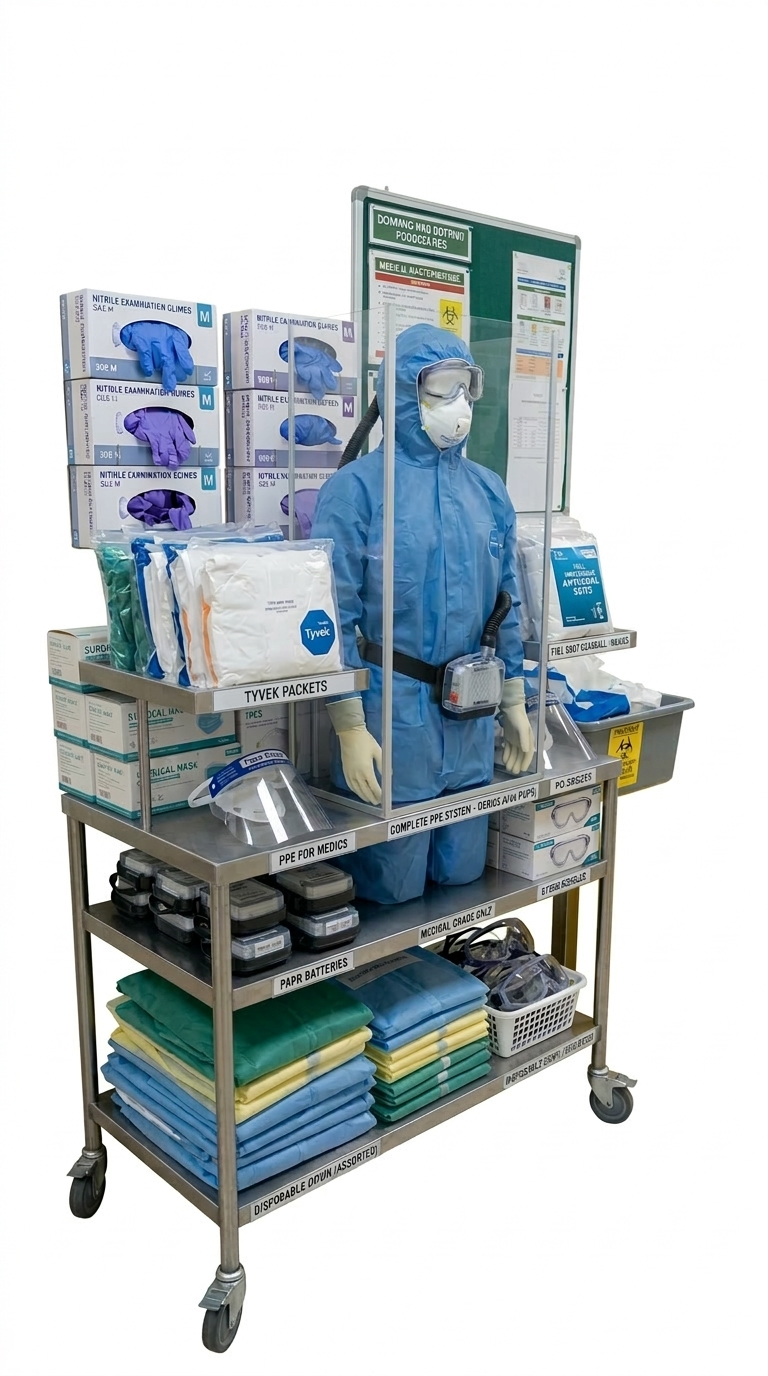
high quality PPE is the simplest way to reduce clinic risk—when it’s chosen and used correctly.
Clinics that rely on random PPE brands, inconsistent sizing, or “whatever is available” during busy shifts often discover the hidden cost later: more exposure incidents, higher staff complaints, frequent replacement, wasted stock, and inconsistent compliance. A safe clinic environment is not created by PPE alone—it’s created by high quality PPE combined with smart selection, proper fit, clear donning/doffing routines, and consistent availability at the point of care.
This guide explains how clinics can build a safer environment using high quality PPE: what “quality” means in practice, which PPE types matter most for clinics, how to reduce common mistakes, and how Rabiyah Medical can support dependable supply and standardization.
Why PPE quality matters more than most clinics think
Many clinics treat PPE as a commodity. But quality affects safety in real, measurable ways:
-
Fit and seal: Poor fit leads to gaps and frequent readjusting (higher contamination risk).
-
Material integrity: Low-quality gloves tear; low-quality gowns leak; low-quality masks collapse when humid.
-
Comfort and compliance: PPE that is uncomfortable or irritating lowers adherence.
-
Consistency: Switching brands weekly confuses staff and increases mistakes.
-
Total cost: Cheap PPE often drives more waste, more consumption, and more replacement.
A “safe environment” is achieved when staff can protect themselves easily—without improvising.
High quality PPE: the clinic-ready PPE checklist
A clinic environment typically needs PPE that supports fast patient turnover and varied procedures. Here’s the practical list.
High quality PPE for gloves
Gloves are the most used item in most clinics. Quality issues show up fast.
What to prioritize
-
tear resistance and consistent thickness
-
reliable sizing (XS–XL depending on clinic needs)
-
low irritation profile
-
stable grip (especially for wet procedures)
-
consistent box-to-box quality
Practical tip: Track glove usage by department and size. If staff “steal” sizes from other rooms, you likely have a sizing mismatch and lower compliance.
High quality PPE for masks and respirators
Your mask choice should match risk and procedure type.
What to prioritize
-
breathability and comfort (reduces face touching)
-
good nose bridge and secure ear loops/head straps
-
consistent filtration performance from trusted sources
-
good fit across face shapes
Clinic reality: Staff who struggle with mask comfort adjust masks often—raising contamination risk. Comfort is a safety feature.
High quality PPE for gowns and aprons
Clinics performing wound care, minor procedures, dental work, or any fluid exposure tasks benefit from reliable gowns.
What to prioritize
-
fluid resistance where needed
-
proper cuff design
-
adequate coverage and tie strength
-
predictable sizing and durability
-
low-lint material (reduces contamination risk)
High quality PPE for eye and face protection
Eye protection is often neglected in clinics, despite splash risk in:
-
dental procedures
-
wound care
-
suctioning
-
injections in high-traffic areas
-
cleaning of contaminated surfaces
What to prioritize
-
anti-fog performance
-
comfortable fit with masks
-
easy cleaning for reusable goggles
-
full coverage for face shields
High quality PPE for head/shoe covers (when required)
Not every clinic needs these daily. Use them where your protocols and risk assessments require.
High quality PPE: how to match PPE to clinic risk zones
A clinic is not one risk level. Divide your facility into zones and match PPE accordingly.
Low-risk zones
Reception, administrative spaces, non-procedure consultation rooms (depending on patient flow).
Typical needs: masks for staff as per policy, hand hygiene supplies.
Moderate-risk zones
General exam rooms, vaccination rooms, phlebotomy areas.
Typical needs: gloves, masks, occasional eye protection, sharps safety.
Higher-risk zones
Wound care rooms, dental rooms, procedure rooms, areas with fluid exposure.
Typical needs: gloves, masks/respirators as appropriate, gowns/aprons, eye/face protection.
This risk-zoning approach prevents waste (over-PPE use in low-risk zones) while protecting staff where exposure is real.
High quality PPE: the fit and sizing problem clinics overlook
Even “good” PPE fails if it doesn’t fit. A clinic that stocks only medium gloves or one gown size forces staff to compromise.
Best practices
-
Stock multiple glove sizes, and track usage.
-
Standardize mask models that fit most staff, and keep alternatives for different face shapes.
-
Provide adjustable gowns where possible.
-
Ensure eye protection fits with mask and does not fog excessively.
Fit improves compliance. Compliance reduces incidents.
High quality PPE: donning and doffing is where clinics win or lose
The biggest PPE failures happen during putting on and taking off.
Clinic-ready system
-
Place PPE stations at point of care (not in a distant store room).
-
Use simple visual posters in each procedure area.
-
Place disposal bins right next to doffing points.
-
Train staff on “clean hands → PPE on → procedure → PPE off → clean hands.”
Common mistakes to prevent
-
touching face after glove use
-
removing mask by front surface
-
reusing single-use items
-
wearing the wrong PPE for splash risk procedures
Short, repeated training is more effective than one long annual training.
High quality PPE: standardization reduces cost and increases safety
Standardization is one of the fastest ways to build a safer clinic environment.
Benefits
-
fewer staff errors
-
easier training
-
predictable fit and comfort
-
better inventory control
-
reduced emergency purchases
-
stronger pricing leverage through planned buying
A clinic that rotates 10 glove brands per quarter usually has higher waste and lower staff satisfaction.
High quality PPE: inventory planning to avoid “PPE panic”
When PPE runs out, staff improvise—risk increases.
Simple inventory rules
-
Set min/max levels for gloves, masks, gowns, shields.
-
Keep safety stock for fast-moving items.
-
Track weekly consumption for top SKUs.
-
Avoid too many SKUs (choose 1–2 models per category).
Procurement tip: Don’t buy PPE only when stock is almost zero. Emergency buying increases cost and decreases quality control.
How Rabiyah Medical supports PPE quality for clinics
Rabiyah Medical can support clinics by:
-
supplying consistent, clinic-appropriate PPE options
-
helping clinics standardize core PPE items (reducing SKU chaos)
-
supporting continuity so clinics avoid emergency substitutions
-
helping align PPE selection with workflow needs and consumption patterns
A safe environment is built when PPE is stable, available, and easy to use daily.
Quick implementation checklist
-
Define clinic risk zones and match PPE accordingly
-
Standardize gloves, masks, gowns, and eye protection models
-
Stock multiple sizes and solve fit gaps
-
Place PPE at point of care with clear signage
-
Train donning/doffing as micro-sessions
-
Set min/max stock levels to prevent shortages
-
Review incidents and adjust PPE setup quarterly
Conclusion
Building a safe clinic environment is not about buying the most expensive PPE—it’s about choosing high quality PPE that fits, lasts, and supports staff compliance. When clinics standardize products, train properly, and plan inventory, they reduce infection risk and protect staff without wasteful overspending. With a trusted supplier like Rabiyah Medical, clinics can maintain consistency and avoid the disruptions that happen when PPE quality and availability are unstable.