
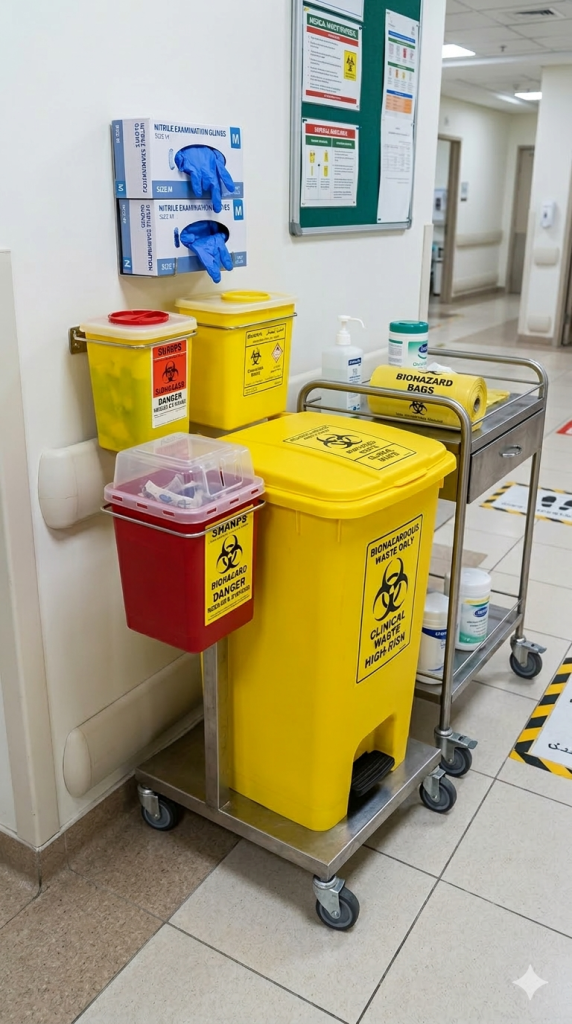
مستلزمات التخلص من النفايات هي خط الدفاع الأول لسلامة التشغيل داخل المنشآت الصحية.
عندما تتعامل المنشآت الصحية مع إدارة النفايات كمنظومة تشغيل يومية—مدعومة بتوفر مستلزمات التخلص من النفايات في المكان والوقت الصحيح—فإنها تقلل إصابات الوخز بالإبر، وتمنع انتقال العدوى، وتخفض أخطاء الفرز، وتقلل التعطل الناتج عن نقص مستلزم بسيط. أخطر مشكلات النفايات الطبية ليست دائمًا أحداثًا كبيرة؛ غالبًا تكون فجوات صغيرة تتكرر: حاوية أدوات حادة غير موجودة عند نقطة الحقن، كيس غير مناسب داخل سلة نفايات سريرية، حاوية ممتلئة فوق الحد، أو غياب أدوات التعامل مع الانسكابات.
هذا الدليل يشرح أفضل الممارسات للتخلص من النفايات الطبية في المستشفيات والعيادات والمختبرات ومراكز الأسنان، مع قائمة عملية بالمستلزمات الأساسية، وإرشادات توزيعها داخل الأقسام، وخطوات تنظيم الفرز والنقل الداخلي والتخزين المؤقت والتدريب. كما يوضح كيف تساعد الرابية الطبية في دعم الاستمرارية عبر توريد مستلزمات استهلاكية أساسية تحافظ على عمل النظام دون انقطاع.
لماذا تفشل أنظمة التخلص من النفايات في الواقع؟
حتى لو كانت السياسة مكتوبة، قد يفشل التطبيق عندما تكون البيئة التشغيلية مضغوطة. أسباب الفشل الشائعة:
-
المستلزمات غير متوفرة عند نقطة الاستخدام، فيلجأ الموظف لاختصار خاطئ
-
استخدام منتجات غير مناسبة (بطانة عامة بدل بطانة سريرية)
-
اختلاف فهم الفرز بين الأقسام
-
أحجام الحاويات غير مناسبة لحجم العمل
-
نقص الملصقات والتعريف عند النقل
-
تدريب متقطع وتبدل موظفين دون ترسيخ السلوك الصحيح
إدارة النفايات ليست “مشكلة قسم النظافة فقط”، بل تصميم مسار عمل يقلل الأخطاء.
أنواع النفايات الطبية ولماذا الفرز مهم
نقطة البداية هي فهم الفئات وفق سياسة منشأتك ومتطلبات السوق:
-
نفايات الأدوات الحادة (إبر، مشارط، لانست، زجاج مكسور)
-
نفايات سريرية/معدية (ملوثة بالدم أو سوائل الجسم)
-
نفايات دوائية (أدوية منتهية أو أمبولات/قوارير)
-
نفايات كيميائية (مختبرات، كواشف حسب الحالة)
-
نفايات عامة غير خطرة (تغليف وورق غير ملوث)
-
نفايات خاصة (حسب الأقسام مثل أنسجة أو مواد عالية الخطورة)
الفرز يقلل المخاطر والتكلفة. خلط العام بالسريري يرفع تكلفة التخلص. خلط الأدوات الحادة بالأكياس يرفع خطر الوخز والإصابة.
مستلزمات التخلص من النفايات الأساسية لكل منشأة صحية
نجاح المنظومة يعتمد على توفر الأساسيات باستمرار.
مستلزمات التخلص من النفايات للأدوات الحادة
الأدوات الحادة أعلى مصدر خطر. الهدف هو التخلص الفوري الآمن.
قائمة أساسية
-
حاويات أدوات حادة بأحجام متعددة
-
حوامل تثبيت جدارية
-
حاويات نقل محكمة عند الحاجة
-
ملصقات حد الامتلاء وإرشادات
أفضل ممارسة
-
ضع الحاوية عند نقطة الحقن/الإجراء مباشرة
-
استبدل قبل الوصول لحد الامتلاء
-
لا يتم نقل أدوات حادة مكشوفة نهائيًا
مستلزمات التخلص من النفايات للنفايات السريرية
قائمة أساسية
-
أكياس/بطانات ملوّنة حسب سياسة المنشأة
-
سلال نفايات سريرية بغطاء
-
سلال تشغيل قدم لتقليل لمس اليد
-
بطانات مانعة للتسرب للأماكن التي تحتوي سوائل أكثر
-
وسائل ربط وإغلاق
أفضل ممارسة
-
طابق حجم الكيس مع حجم السلة لتجنب التمزق والفيضان
-
ثبّت اللون والتعريف بحيث لا يعتمد الموظف على التخمين
مستلزمات التخلص من النفايات للملصقات والتعريف
قائمة أساسية
-
ملصقات نوع النفايات
-
ملصقات “لا تملأ أكثر من الحد”
-
ملصقات تاريخ/وقت للتخزين المؤقت
-
وسوم تعريف للقسم (اختياري لكنه مفيد في المستشفيات الكبيرة)
مستلزمات التخلص من النفايات للتعامل مع الانسكابات
قائمة أساسية
-
أطقم انسكاب للدم/سوائل الجسم
-
مواد امتصاص (وسائد/حبيبات)
-
أدوات جمع (مغارف/كاشطات)
-
مناديل مطهرة ومطهرات أسطح معتمدة
-
معدات وقاية للاستجابة (قفازات، مريلة/ثوب، حماية عين، كمامة عند الحاجة)
-
أكياس نفايات مخصصة لمخلفات التنظيف
أفضل ممارسة
-
ضع أطقم الانسكاب قرب المناطق عالية المخاطر مثل الطوارئ والمختبرات وغرف الإجراءات
مستلزمات التخلص من النفايات لحركة النفايات والنقل الداخلي
قائمة أساسية
-
عربات نقل سهلة التنظيف
-
بطانات احتياطية
-
أدوات مخصصة للنفايات السريرية منفصلة عن التنظيف العام
-
حلول نقل محكمة للمواد المغلقة
استراتيجية التوزيع: أين توضع المستلزمات؟
التوفر وحده لا يكفي؛ مكان التوفر هو الذي يحدد الالتزام.
قواعد نقطة الاستخدام
-
حاوية الأدوات الحادة عند كل نقطة حقن/سحب دم/إجراء
-
سلة نفايات سريرية ضمن مسافة قريبة دون إعاقة الحركة
-
أدوات تعقيم يدين ووسائل الوقاية قرب نقاط التخلص (خصوصًا العزل)
-
سلال إضافية للأماكن كثيفة الاستخدام
مناطق عالية الاحتياج
-
الطوارئ والفرز
-
غرف العمليات والإجراءات
-
العناية المركزة
-
المختبر وسحب الدم
-
الغسيل الكلوي
-
عيادات الأسنان
-
غرف العزل
-
مناطق تحضير الأدوية عند الحاجة
كلما احتاج الموظف للمشي للتخلص من النفايات، زادت “الاختصارات”.
إجراءات تشغيل قصيرة تمنع الحوادث
بدل سياسات طويلة، اعتمد قواعد سهلة:
-
التخلص الفوري من الأدوات الحادة في حاوية معتمدة
-
عدم إعادة تغطية الإبر إلا حسب سياسة محددة وبطريقة مدربة
-
إغلاق الأكياس قبل النقل
-
استبدال الحاويات والأكياس قبل الامتلاء
-
استخدام معدات الوقاية عند التعامل مع النفايات السريرية
-
الإبلاغ الفوري عن أي وخز أو تعرض
تقليل المخاطر: كيف نقلل وخز الإبر والتلوث؟
أفضل ما يقلل وخز الإبر:
-
حاويات الأدوات الحادة في متناول اليد
-
منع تجاوز حد الامتلاء
-
توحيد الأحجام حسب المنطقة
-
تذكيرات واضحة
-
تدقيق دوري لنقاط التخلص
تقليل التلوث:
-
سلال بغطاء وتشغيل قدم
-
أكياس مناسبة السماكة ومقاومة التسرب
-
أطقم انسكاب جاهزة
-
تنظيف دوري لعربات نقل النفايات
-
ملصقات فصل واضحة
النفايات الدوائية ومخلفات الأدوية
النفايات الدوائية تختلف عن السريرية. تحتاج توعية ومسار واضح حسب سياسة المنشأة:
-
حاويات مخصصة قرب مناطق التحضير/الإعطاء
-
توضيح ما يذهب للنفايات الدوائية وما يذهب للسريرية
-
ربط التخلص بتدفق الأدوية المنتهية من الصيدلية
-
الانتباه للأمبولات لأنها قد تكون “أداة حادة” أيضًا
التخزين المؤقت والنقل الداخلي
حتى لو كان التخلص النهائي عبر جهة خارجية، يبقى التحكم الداخلي حاسمًا.
أفضل ممارسات التخزين المؤقت:
-
مناطق مخصصة ومعلّمة
-
تقليل الوصول غير المصرح
-
تنظيف وتعقيم دوري للمكان
-
تحديد وقت أقصى لتراكم النفايات
-
أرضيات قابلة للتنظيف (غير مسامية)
أفضل ممارسات النقل:
-
نقل الأكياس والحاويات وهي مغلقة فقط
-
استخدام عربات مخصصة
-
تقليل المرور بمناطق عامة قدر الإمكان
-
جدول ثابت لجمع النفايات لمنع الامتلاء
التدريب والتدقيق: كيف نجعل الالتزام متكررًا؟
التدريب:
-
تدريب تعريفي للموظفين الجدد
-
تحديثات للأقسام عالية المخاطر
-
لوحات مختصرة قرب نقاط التخلص
-
تذكيرات قصيرة أثناء تسليم المناوبة
التدقيق:
-
فحص امتلاء حاويات الأدوات الحادة
-
فحص توفر الأكياس والبطانات
-
فحص توفر أطقم الانسكاب
-
تدقيق الفرز العشوائي
-
مراجعة أسباب حوادث التعرض إن حدثت
الهدف من التدقيق هو إصلاح عملي: تغيير مكان سلة، زيادة حجم حاوية، إضافة حامل، أو تعديل نقطة إعادة طلب.
التخطيط للمخزون لمنع النفاد
تنكسر منظومة النفايات عندما تنفد المستلزمات.
قواعد بسيطة:
-
حد أدنى وحد أعلى للأكياس والحاويات والملصقات وأطقم الانسكاب
-
نقاط إعادة طلب حسب استهلاك كل قسم
-
توحيد الأنواع لتسهيل التوريد
-
مخزون أمان للأقسام عالية الاستهلاك
كيف تدعم الرابية الطبية جاهزية المنشآت؟
الرابية الطبية يمكنها دعم المنشآت الصحية عبر:
-
توفير مستمر لمستلزمات التخلص من النفايات الأكثر استهلاكًا
-
دعم توحيد الأصناف لتقليل التشتت
-
تقليل الشراء الطارئ الناتج عن نفاد مستلزم أساسي
-
دعم التخطيط حسب استهلاك الأقسام
المنظومة لا تنجح بوجود السياسة وحدها؛ تنجح بوجود المستلزمات حيث يحتاجها الفريق.
خلاصة
منظومة التخلص من النفايات الطبية تبدأ من نقطة الاستخدام: حاوية أدوات حادة قريبة، كيس مناسب ومُعرّف، فصل واضح، إغلاق قبل النقل، أطقم انسكاب جاهزة، تدريب مستمر، وتدقيق يصحح بسرعة. ومع توفر مستلزمات التخلص من النفايات بشكل ثابت—وبدعم توريد موثوق من الرابية الطبية—تقل الحوادث وتزداد سلامة التشغيل داخل المنشأة.
medical waste disposal supplies are the frontline of safe healthcare operations.
When healthcare facilities treat waste disposal as a controlled system—supported by the right medical waste disposal supplies—they reduce needle-stick injuries, prevent cross-contamination, avoid operational disruption, and protect staff and patients. The biggest mistakes in waste management are rarely “major accidents.” They are small gaps that repeat: the wrong bin at the point of care, missing sharps containers, overfilled bags, unclear labeling, inconsistent segregation, or a lack of spill readiness. Those gaps increase risk every shift.
This guide explains best practices for medical waste disposal supplies in healthcare facilities: what to stock, where to place it, how to standardize processes, how to reduce waste-related incidents, and how to build a replenishment plan that prevents stockouts. It’s written for hospitals, clinics, outpatient centers, dental practices, laboratories, and home-care providers. It also highlights how Rabiyah Medical can support consistent availability of essential consumables so your system doesn’t break when demand spikes.
Why medical waste disposal fails in real life
Even facilities with good policies struggle when execution is inconsistent. Waste disposal systems fail for predictable reasons:
-
Supplies are not at the point of use. Staff take shortcuts when bins are far away.
-
Wrong products are used. A non-clinical liner ends up in clinical waste; sharps go into a general trash bin.
-
Segregation rules are unclear or inconsistent. Departments interpret policies differently.
-
Containers are the wrong size. Small sharps containers overflow fast; large bins are placed where they don’t fit.
-
Labels and documentation are missing. During transport or audits, gaps appear.
-
Training is occasional instead of continuous. New staff mimic habits, not standards.
Good waste disposal is not just a “waste team” problem—it’s a workflow design problem.
Medical waste categories and why segregation matters
Different waste types require different handling. A practical system begins with clear categories (aligned with your internal policy and local requirements):
-
Sharps waste (needles, scalpels, lancets, broken glass)
-
Infectious/clinical waste (items contaminated with blood/body fluids)
-
Pharmaceutical waste (expired or partially used medications, vials, ampoules)
-
Chemical waste (lab reagents, disinfectant concentrates where applicable)
-
General non-hazardous waste (paper, packaging, non-contaminated materials)
-
Special waste (pathology, cytotoxic materials where applicable)
Segregation reduces risk and cost. Mixing general waste with clinical waste increases disposal cost. Mixing sharps with bags increases injury risk.
Core medical waste disposal supplies every facility must stock
A reliable system depends on consistent stocking of the essentials. Here are the must-haves most facilities require.
medical waste disposal supplies for sharps safety
Sharps are the highest-risk waste stream. Your system should make safe disposal automatic.
Stock list
-
Sharps containers (multiple sizes for different locations)
-
Wall brackets or mounting systems
-
Sealed transport bins (if used)
-
Fill-line labels or visual indicators
Best practice
-
Place sharps containers at the point of use: injection stations, procedure rooms, blood draw areas, vaccination stations, dental rooms, labs.
-
Replace containers before they exceed fill line.
-
Avoid moving uncovered sharps—ever.
medical waste disposal supplies for clinical waste collection
Clinical waste handling must be consistent and easy.
Stock list
-
Color-coded clinical waste bags/liners (per your facility’s policy)
-
Clinical waste bins with lids
-
Foot pedal bins (reduces hand contact)
-
Leak-resistant liners for fluid-heavy areas
-
Bag ties or sealing accessories
Best practice
-
Match bag size to bin size (prevents overflow and tearing).
-
Standardize colors and labels so staff never guess.
medical waste disposal supplies for labeling and traceability
Labels reduce confusion and support safe transport.
Stock list
-
Waste category labels
-
“Do not overfill” stickers
-
Date/time labels for temporary storage areas
-
Department ID tags (optional but helpful in large hospitals)
Best practice
-
Label at the time of sealing.
-
Ensure temporary storage areas have clear signage.
medical waste disposal supplies for spill and exposure response
Spills happen. The goal is rapid, controlled response.
Stock list
-
Spill kits (blood/body fluid)
-
Absorbent pads/granules
-
Disposable scoops/scrapers
-
Disinfectant wipes and approved surface disinfectants
-
PPE for spill response (gloves, gown, eye protection, mask as needed)
-
Biohazard bags for cleanup materials
Best practice
-
Keep spill kits near high-risk zones: ER, labs, dialysis, procedure areas, wards.
-
Train staff on when to escalate vs self-clean.
medical waste disposal supplies for housekeeping and waste transport
Waste flow needs tools and safe containers.
Stock list
-
Waste carts with easy-to-clean surfaces
-
Cart liners and spare bags
-
Dedicated tools for clinical waste (separate from general cleaning)
-
Trolleys for sealed waste movement (where applicable)
Best practice
-
Separate routes and timing for waste movement when possible.
-
Clean carts routinely; “dirty carts” spread contamination.
Placement strategy: where supplies should be installed
Stocking is only half of success. Placement determines compliance.
Point-of-care placement rules
-
Sharps containers at every injection/procedure point
-
Clinical waste bins within reach but not blocking workflow
-
Hand hygiene and PPE near disposal points (especially isolation areas)
-
Dedicated bins for high-volume areas (ER, vaccination, wound care)
High-risk zones that need extra supplies
-
Emergency department and triage
-
Operating rooms and procedure rooms
-
ICU/high acuity wards
-
Labs and phlebotomy stations
-
Dialysis units
-
Dental clinics
-
Isolation rooms
-
Pharmacy compounding/prep areas (where applicable)
If staff must walk to dispose of waste, shortcuts increase.
Standard operating procedures: the “simple rules” that prevent incidents
Policies are often long. Facilities need short, consistent rules that teams can remember.
Safe handling rules
-
Never recap needles unless your policy requires a specific technique (and staff are trained).
-
Dispose sharps immediately after use into approved sharps containers.
-
Seal bags before moving them; never carry open clinical waste.
-
Replace bins/liners before overflow.
-
Wear appropriate PPE when handling clinical waste.
-
Report needle-stick and exposure events immediately.
Seal, label, transport discipline
-
Seal bags using the same method every time.
-
Label sealed waste before transport.
-
Transport only sealed containers.
-
Use dedicated carts where possible.
Reducing risk: preventing needle-stick injuries and contamination events
Needle-stick injuries are preventable, but prevention requires both training and supply placement.
What reduces needle-stick injuries most
-
Sharps containers within arm’s reach
-
Not overfilling containers
-
Standardizing container sizes per area
-
Clear “no recapping” reminders where relevant
-
Sharps safety devices (where used)
-
Routine audits of disposal points
What reduces contamination risk
-
Lidded bins with foot pedals
-
Correct bag thickness and leak resistance
-
Quick spill response supplies
-
Regular waste cart cleaning
-
Clear segregation signage
Managing pharmaceutical waste and medication-related disposables
Pharmaceutical waste is not the same as clinical waste. It often requires separate handling to prevent diversion, exposure, and confusion.
Practical approach
-
Assign dedicated bins/containers for medication waste where required
-
Keep containers near medication prep and administration areas
-
Train staff on what goes into pharmaceutical waste vs clinical waste
-
Track expired stock flow from pharmacy to disposal pathway
In many facilities, confusion between vials/ampoules and sharps also needs clear rules—because ampoules can be sharps risk.
Temporary storage and internal transport: keeping waste controlled
Even if final disposal is outsourced, internal control is essential.
Temporary storage best practices
-
Use designated, labeled areas
-
Limit access (to prevent tampering)
-
Use time limits and rotation (so waste doesn’t accumulate)
-
Keep floors clean and sealed; avoid porous surfaces
-
Ensure cleaning and disinfection schedules for storage areas
Transport best practices
-
Move sealed waste only
-
Use dedicated carts
-
Avoid routes that pass through public patient areas when possible
-
Schedule routine pickups from clinical areas to prevent overflow
Training and audits: making compliance repeatable
Waste disposal behavior is shaped by what staff see every day.
Training essentials
-
Orientation training for new hires
-
Refreshers for high-risk departments
-
Simple posters at disposal stations
-
Micro-training: 3-minute reminders during shift handovers
Audit essentials
-
Monthly checks of bin placement and fill levels
-
Sharps container overfill audits
-
Waste segregation spot checks
-
Spill kit availability checks
-
Incident trend review (what’s causing exposures?)
Audits should lead to practical fixes: move a bin, change container size, add a bracket, adjust supply levels.
Procurement and inventory planning: preventing stockouts
Waste systems collapse when supplies run out.
Simple planning rules
-
Set min/max levels for bags, sharps containers, labels, spill kits
-
Track consumption by department
-
Use reorder points based on usage trends
-
Standardize products across the facility to simplify procurement
-
Build safety stock for high-usage consumables
Why standardization helps
When every ward uses the same bag type and sharps container size set, you reduce:
-
staff confusion
-
incorrect disposal
-
procurement complexity
-
emergency purchasing
How Rabiyah Medical supports medical waste disposal readiness
Facilities need a reliable source for daily consumables—especially medical waste disposal supplies that are used continuously.
Rabiyah Medical can support healthcare facilities by:
-
providing consistent access to core waste disposal consumables
-
helping facilities standardize high-usage disposal items
-
supporting supply continuity to reduce emergency shortages
-
offering practical procurement support aligned with facility workflows
A strong disposal system is built on reliability. If the right supplies aren’t there, the safest policy won’t be followed.
Quick checklist: medical waste disposal supplies by facility type
Hospitals
-
multi-size sharps containers + brackets
-
clinical waste bins + color-coded liners
-
spill kits per ward and per high-risk area
-
waste carts and transport supplies
-
labeling supplies and signage
Clinics / Outpatient centers
-
sharps containers at every treatment room
-
lidded clinical waste bins
-
spill kits near procedure rooms
-
clear segregation signage
Dental practices
-
sharps containers for needles and blades
-
small clinical waste bins near chairside
-
spill cleanup supplies for suction-related areas
Laboratories
-
sharps containers for glass and needles
-
chemical waste handling supplies (as applicable)
-
spill response supplies prioritized
Conclusion
A strong medical waste program is built on daily discipline—supported by reliable medical waste disposal supplies at the point of care. Facilities that focus on segregation, sharps safety, clear placement, standardized workflows, training, audits, and stock planning reduce incidents and protect staff and patients. With structured procurement and support from Rabiyah Medical, healthcare facilities can maintain consistent readiness and reduce risk without constant firefighting.