
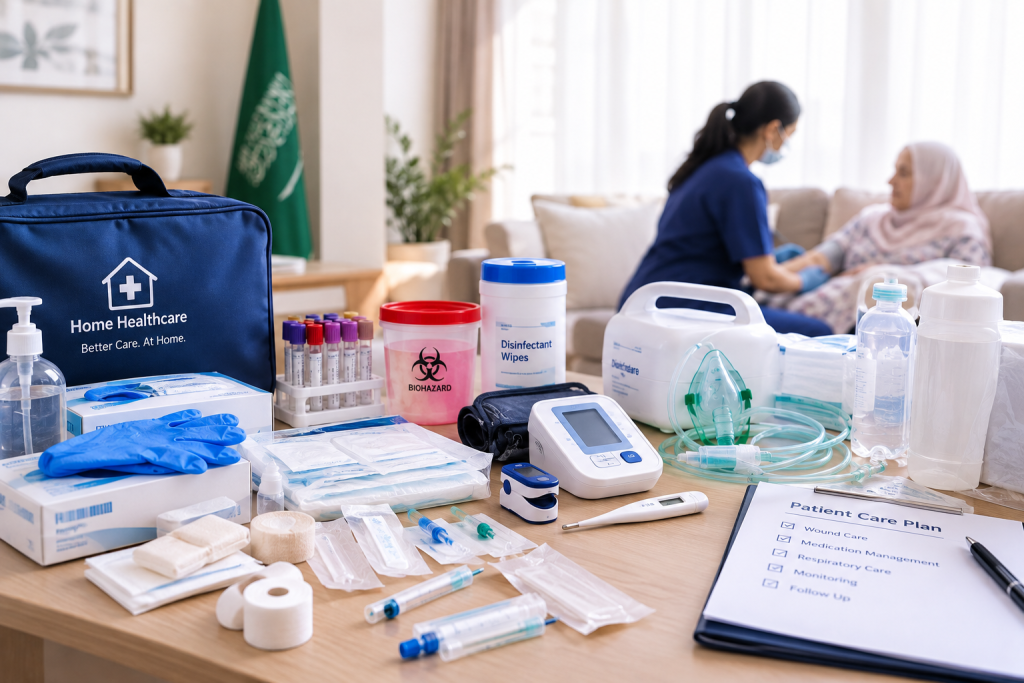
مستلزمات الرعاية الصحية المنزلية في السعودية تلعب دورًا أساسيًا في توفير رعاية آمنة وفعالة للمرضى في منازلهم. ومع توسع خدمات الرعاية الصحية المنزلية، أصبح مقدمو الخدمة بحاجة إلى مجموعة متكاملة من المستلزمات الطبية والأجهزة والمنتجات التي تساعد الفرق الصحية على تقديم الرعاية المناسبة خارج بيئة المستشفى.
وتشمل الرعاية الصحية المنزلية مجموعة متنوعة من الخدمات، مثل الرعاية التمريضية، والعناية بالجروح، والعلاج الطبيعي، والعلاج التنفسي، وإدارة الأدوية، والتغذية، ومتابعة الأمراض المزمنة. وتوضح وزارة الصحة السعودية أن خدمات الرعاية الصحية المنزلية قد تشمل أيضًا التحاليل المخبرية، وتوفير الأدوية والمستلزمات الطبية، والعناية بالقساطر وأنابيب التغذية، والعلاج الوريدي، وغيرها من الخدمات وفقًا لاحتياجات المريض.
لذلك، لا تقتصر عملية التوريد على توفير المنتجات فقط، بل تتطلب تخطيطًا دقيقًا يضمن توفر المستلزمات المناسبة، وجودتها، وسلامة استخدامها، وسهولة نقلها وتخزينها.
لماذا تحتاج الرعاية الصحية المنزلية إلى خطة توريد منظمة؟
تختلف بيئة الرعاية المنزلية عن المستشفيات والعيادات. ففي المنزل، قد يعمل مقدم الرعاية ضمن مساحة محدودة وبموارد أقل، مما يجعل اختيار المستلزمات المناسبة وتنظيمها أمرًا بالغ الأهمية.
وقد يؤدي نقص أحد المستلزمات الأساسية إلى تأخير الزيارة أو اضطرار الفريق الصحي إلى تعديل خطة الرعاية. وفي المقابل، قد يؤدي شراء كميات أكبر من الحاجة إلى ارتفاع تكاليف التخزين أو انتهاء صلاحية بعض المنتجات.
وتساعد خطة التوريد المنظمة على:
- ضمان توفر المستلزمات الأساسية.
- تقليل احتمالية نقص المخزون.
- تحسين إدارة المستلزمات الطبية.
- تقليل الهدر والمنتجات منتهية الصلاحية.
- دعم سلامة المرضى ومقدمي الرعاية.
- تحسين التخطيط للزيارات المنزلية.
- الاستجابة للاحتياجات المختلفة لكل مريض.
أهم مستلزمات الرعاية الصحية المنزلية
تختلف احتياجات كل مريض حسب حالته الصحية والخدمات المقدمة له. لذلك، يجب أن تعتمد قائمة المستلزمات على خطة الرعاية والتقييم السريري لكل حالة.
1. مستلزمات العناية اليومية
تشمل الرعاية المنزلية العديد من المنتجات الأساسية التي تستخدم خلال الزيارات اليومية أو الدورية.
ومن أمثلتها:
- القفازات الطبية.
- الكمامات.
- الشاش الطبي.
- القطن الطبي.
- المناديل الطبية.
- المطهرات.
- الضمادات.
- العبوات الطبية.
- مستلزمات العناية الشخصية المرتبطة بالخطة العلاجية.
ويجب تحديد الكميات بناءً على معدل الاستخدام المتوقع ومدة تقديم الخدمة للمريض.
2. مستلزمات العناية بالجروح
تحتاج بعض حالات الرعاية المنزلية إلى تغيير الضمادات ومتابعة الجروح بشكل منتظم، خاصة لدى المرضى طريحي الفراش أو المصابين بقرح الضغط.
وقد تشمل مستلزمات العناية بالجروح:
- الشاش المعقم.
- الضمادات الطبية.
- المحاليل المناسبة لتنظيف الجروح.
- الأشرطة الطبية.
- القفازات المعقمة.
- المستلزمات أحادية الاستخدام.
- أكياس التخلص من النفايات الطبية.
ويجب اختيار نوع الضماد والمستلزمات المستخدمة وفقًا لتقييم الحالة وتعليمات مقدم الرعاية الصحية، وليس بناءً على التكلفة فقط.
3. مستلزمات القسطرة وأنابيب التغذية
قد يحتاج بعض المرضى إلى رعاية القسطرة البولية أو أنابيب التغذية المعوية، وهي من الخدمات التي تندرج ضمن خدمات الرعاية الصحية المنزلية التي تقدمها وزارة الصحة السعودية.
وقد يحتاج مقدمو الخدمة إلى:
- مستلزمات القسطرة.
- أكياس تجميع البول.
- أنابيب التغذية.
- مستلزمات تثبيت الأنابيب.
- المحاقن المناسبة.
- القفازات.
- مستلزمات التنظيف والعناية.
- حاويات التخلص من المستلزمات المستخدمة.
ويجب أن تكون هذه المنتجات مناسبة للاستخدام المقصود، وأن يتم التعامل معها وفق تعليمات الشركة المصنعة والخطة العلاجية.
4. أجهزة المراقبة الطبية المنزلية
يمكن أن تعتمد الرعاية المنزلية على مجموعة من أجهزة المراقبة، خاصة للمرضى الذين يحتاجون إلى متابعة مستمرة لبعض المؤشرات الحيوية.
وقد تشمل:
- أجهزة قياس ضغط الدم.
- أجهزة قياس درجة الحرارة.
- أجهزة قياس مستوى الأكسجين في الدم.
- أجهزة قياس سكر الدم.
- أجهزة مراقبة المؤشرات الحيوية عند الحاجة.
- ملحقات وأدوات تشغيل الأجهزة.
ولا ينبغي اختيار الأجهزة بناءً على السعر فقط. فدقة الجهاز، وسهولة الاستخدام، وتوفر الدعم الفني، ومتطلبات الصيانة، وتوافقه مع احتياجات المريض كلها عوامل مهمة.
وتنبه الهيئة العامة للغذاء والدواء إلى ضرورة شراء الأجهزة الطبية المنزلية من منشآت مرخصة، والتحقق من حصول الجهاز على الترخيص أو الإذن التسويقي المطلوب، إضافة إلى الالتزام بتعليمات الاستخدام والصيانة.
5. مستلزمات العلاج التنفسي
قد يحتاج المرضى الذين يعانون من بعض الحالات التنفسية إلى أجهزة ومستلزمات تساعد في تقديم الرعاية داخل المنزل.
وقد تشمل:
- أجهزة تركيز الأكسجين.
- مستلزمات العلاج بالأكسجين.
- أقنعة التنفس.
- الأنابيب والوصلات المناسبة.
- المرطبات عند الحاجة.
- الفلاتر والملحقات.
- مستلزمات أجهزة التنفس المنزلية.
وتخضع بعض الأجهزة الكهربائية الطبية المستخدمة في بيئة الرعاية الصحية المنزلية لمتطلبات خاصة تتعلق بالسلامة والأداء الأساسي، بما في ذلك أجهزة التنفس المنزلية.
لذلك، يجب اختيار الأجهزة المناسبة للحالة واستخدامها وفق التعليمات والتدريب المطلوب.
6. مستلزمات مكافحة العدوى
تُعد مكافحة العدوى جزءًا أساسيًا من الرعاية المنزلية، خصوصًا عندما يقوم مقدمو الخدمة بإجراءات طبية أو يتعاملون مع الجروح والقساطر والعلاجات المختلفة.
وتشمل المستلزمات الأساسية:
- القفازات.
- الكمامات.
- المطهرات.
- المناديل المطهرة.
- مستلزمات تنظيف الأسطح.
- أكياس النفايات الطبية.
- حاويات الأدوات الحادة عند الحاجة.
- معدات الوقاية الشخصية المناسبة.
وينبغي أن تكون هذه المستلزمات متوفرة قبل بدء الزيارة المنزلية، خاصة عندما تتطلب خطة الرعاية إجراءات متعددة.
7. مستلزمات إعطاء الأدوية والعلاج
تتطلب بعض خدمات الرعاية المنزلية إدارة الأدوية أو إعطاء العلاج تحت إشراف المختصين. وتشير وزارة الصحة إلى أن خدمات الرعاية الصحية المنزلية قد تشمل العلاج الوريدي وتقديم الأدوية والمستلزمات الطبية وفق احتياجات المريض.
وقد يحتاج مقدم الخدمة إلى:
- المحاقن والإبر المناسبة.
- مستلزمات إعطاء الأدوية.
- مستلزمات العلاج الوريدي عند الحاجة.
- المطهرات.
- القفازات.
- حاويات التخلص من الأدوات الحادة.
- أدوات تنظيم الأدوية.
ويجب أن يتم التعامل مع الأدوية والأجهزة والمستلزمات وفق الخطة العلاجية والتعليمات المهنية المعتمدة.
كيفية اختيار المستلزمات المناسبة لكل مريض
لا توجد قائمة واحدة تناسب جميع مرضى الرعاية المنزلية. لذلك، تبدأ عملية التوريد الجيدة بتقييم احتياجات المريض.
وينبغي لمقدم الخدمة تحديد:
- الحالة الصحية للمريض.
- نوع الخدمة المطلوبة.
- عدد الزيارات.
- الإجراءات التي سيتم تنفيذها.
- الأجهزة المطلوبة.
- معدل استهلاك المستلزمات.
- احتياجات التخزين.
- المدة المتوقعة للرعاية.
ويمكن بعد ذلك إعداد قائمة مستلزمات مخصصة لكل حالة بدلًا من استخدام قائمة عامة لجميع المرضى.
كيف يمكن تقليل نقص المستلزمات؟
يُعد نقص المستلزمات أحد أكبر التحديات التي يمكن أن تؤثر في استمرارية الرعاية المنزلية.
ولتقليل احتمالية النقص، يمكن لمقدمي الخدمة:
تحديد الحد الأدنى للمخزون
يجب تحديد مستوى أدنى لكل منتج أساسي، خاصة المنتجات التي تستخدم بشكل متكرر أو لا يمكن استبدالها بسهولة.
متابعة معدلات الاستخدام
يساعد تسجيل استهلاك المستلزمات خلال الزيارات السابقة على التنبؤ بالاحتياجات المستقبلية بصورة أكثر دقة.
التخطيط للزيارات مسبقًا
يمكن مراجعة احتياجات كل مريض قبل الزيارة وتجهيز المستلزمات المطلوبة مسبقًا، مما يقلل من احتمالية نسيان المنتجات أو اكتشاف نقصها في اللحظة الأخيرة.
الاحتفاظ بمخزون احتياطي
قد يكون من المفيد الاحتفاظ بكمية احتياطية مناسبة من بعض المنتجات الأساسية، خصوصًا في الحالات التي تتطلب زيارات متكررة أو رعاية طويلة الأمد.
تقليل الهدر وانتهاء الصلاحية
لا تقتصر إدارة المخزون على منع النقص؛ بل يجب أيضًا تقليل المنتجات غير المستخدمة أو منتهية الصلاحية.
ويمكن تحقيق ذلك من خلال:
- مراجعة تواريخ انتهاء الصلاحية بشكل دوري.
- استخدام المنتجات الأقرب إلى انتهاء الصلاحية أولًا.
- تجنب شراء كميات أكبر من معدل الاستهلاك.
- تخزين المنتجات وفق تعليمات الشركة المصنعة.
- فصل المنتجات حسب نوعها واستخدامها.
- مراجعة المخزون قبل تنفيذ طلبات شراء جديدة.
وتساعد هذه الإجراءات على خفض التكاليف وتحسين كفاءة عمليات التوريد.
اختيار مورد موثوق لمستلزمات الرعاية الصحية المنزلية
يُعد المورد جزءًا مهمًا من نجاح خدمات الرعاية الصحية المنزلية. ولا ينبغي أن يعتمد اختيار المورد على السعر فقط.
ومن أهم العوامل التي يجب تقييمها:
- جودة المنتجات.
- توفر المستلزمات الأساسية.
- سرعة التوصيل.
- الالتزام بمواعيد التسليم.
- ظروف التخزين والنقل.
- توفر المستندات المطلوبة.
- الدعم الفني وخدمة ما بعد البيع.
- توفر قطع الغيار والملحقات عند الحاجة.
- القدرة على التعامل مع الطلبات العاجلة.
- الالتزام بالمتطلبات التنظيمية.
وتؤكد الهيئة العامة للغذاء والدواء أهمية شراء الأجهزة الطبية المنزلية من منشآت مرخصة، والتحقق من التراخيص ومتطلبات التسويق، كما تشدد على أهمية توفر التعليمات المناسبة وخدمات الضمان والصيانة والدعم الفني.
متطلبات التخزين والنقل
تختلف متطلبات التخزين من منتج إلى آخر. فقد تحتاج بعض المنتجات إلى درجات حرارة محددة أو حماية من الرطوبة والضوء، بينما يمكن تخزين منتجات أخرى في ظروف عادية.
لذلك، يجب على مقدمي الخدمة وموردي مستلزمات الرعاية الصحية المنزلية في السعودية مراعاة:
- درجة حرارة التخزين.
- الرطوبة والتهوية.
- حماية المنتجات من التلف.
- ترتيب المنتجات حسب تاريخ الانتهاء.
- سلامة التغليف.
- ظروف النقل.
- تعليمات الشركة المصنعة.
وتزداد أهمية هذه النقاط عند التعامل مع الأجهزة أو المنتجات الحساسة التي قد تتأثر ظروفها أثناء النقل إلى منزل المريض.
استخدام التكنولوجيا لإدارة مستلزمات الرعاية المنزلية
يمكن لأنظمة إدارة المخزون الرقمية أن تساعد شركات ومقدمي خدمات الرعاية المنزلية على تنظيم عمليات التوريد بشكل أكثر كفاءة.
وقد تساعد هذه الأنظمة في:
- متابعة مستويات المخزون.
- تسجيل المستلزمات المستخدمة لكل مريض.
- مراقبة تواريخ انتهاء الصلاحية.
- إنشاء تنبيهات لإعادة الطلب.
- متابعة طلبات الشراء والتوصيل.
- تحليل معدلات الاستهلاك.
- تحديد المنتجات الأكثر استخدامًا.
كما يمكن ربط بيانات المخزون بخطط الزيارات المنزلية، مما يساعد الفرق على تجهيز المستلزمات المطلوبة قبل التوجه إلى منزل المريض.
قائمة مراجعة لمستلزمات الرعاية الصحية المنزلية
قبل إرسال الفريق الطبي إلى زيارة منزلية، يمكن استخدام قائمة مراجعة بسيطة تشمل:
- مراجعة خطة الرعاية الخاصة بالمريض.
- تحديد الإجراءات المطلوبة خلال الزيارة.
- تجهيز المستلزمات الطبية اللازمة.
- التأكد من توفر معدات الوقاية الشخصية.
- التحقق من الأجهزة المطلوبة وملحقاتها.
- مراجعة تواريخ انتهاء الصلاحية.
- التأكد من سلامة التغليف.
- توفير مستلزمات التخلص من النفايات.
- التحقق من احتياجات التخزين والنقل.
- تسجيل المستلزمات المستخدمة بعد الزيارة.
- تحديث المخزون وإعادة طلب المنتجات عند الحاجة.
ويمكن أن تساعد هذه الخطوات على جعل الزيارات المنزلية أكثر تنظيمًا وتقليل احتمالية حدوث تأخير بسبب نقص المستلزمات.
بناء استراتيجية طويلة الأمد للتوريد
لا ينبغي أن تكون عملية شراء المستلزمات استجابة لنقص المخزون فقط. بل تحتاج خدمات الرعاية الصحية المنزلية إلى استراتيجية توريد طويلة الأمد تعتمد على البيانات الفعلية ومعدلات الاستخدام واحتياجات المرضى.
ويمكن أن تتضمن الاستراتيجية:
- تحليل الاستهلاك بشكل دوري.
- تقييم أداء الموردين.
- تحديد المنتجات الحرجة.
- وضع مستويات مناسبة للمخزون الاحتياطي.
- تحديث قوائم المستلزمات حسب الخدمات المقدمة.
- مراجعة تكاليف الشراء والتوصيل.
- الحفاظ على موردين موثوقين للمنتجات الأساسية.
ومع تطور خدمات الرعاية الصحية المنزلية في المملكة، ستزداد أهمية وجود سلاسل إمداد مرنة قادرة على دعم الفرق الصحية خارج المستشفى وتوفير المنتجات المناسبة في الوقت المناسب.
الخلاصة
تُعد مستلزمات الرعاية الصحية المنزلية في السعودية عنصرًا أساسيًا لتقديم رعاية آمنة ومنظمة للمرضى في منازلهم. وتختلف الاحتياجات من مريض إلى آخر، بدءًا من المستلزمات الأساسية للعناية اليومية والجروح، وصولًا إلى أجهزة المراقبة والعلاج التنفسي والقساطر وأنابيب التغذية ومستلزمات إعطاء الأدوية.
وتتطلب إدارة هذه المستلزمات تخطيطًا دقيقًا، ومتابعة مستمرة للمخزون، واختيار منتجات مناسبة وموثوقة، بالإضافة إلى التعامل مع مورد قادر على توفير الإمدادات بشكل مستمر وآمن.
ومن خلال الجمع بين التقييم الدقيق لاحتياجات المرضى، وإدارة المخزون الرقمية، والتخطيط المسبق للزيارات، ومراقبة تواريخ الصلاحية، واختيار المورد المناسب، يمكن لمقدمي خدمات الرعاية الصحية المنزلية تقليل النقص والهدر والتأخير، ودعم تقديم رعاية أكثر كفاءة وأمانًا.
فالهدف ليس فقط توفير المستلزمات، وإنما ضمان وصول المنتجات المناسبة إلى المريض المناسب، في الوقت المناسب، وبالجودة والظروف التي تحافظ على سلامة استخدامها.
Home healthcare medical supplies in Saudi Arabia play an essential role in providing safe and effective patient care at home. As home healthcare services continue to expand, providers need a comprehensive range of medical supplies, equipment, and products that enable healthcare teams to deliver appropriate care outside the hospital environment.
Home healthcare may include a wide range of services, such as nursing care, wound care, physical therapy, respiratory therapy, medication management, nutrition support, and chronic disease monitoring. Saudi Arabia’s Ministry of Health states that home healthcare services may also include laboratory tests, the provision of medications and medical supplies, catheter and feeding-tube care, intravenous therapy, and other services based on the patient’s needs.
Therefore, procurement is not simply about purchasing products. It requires careful planning to ensure that the right supplies are available, meet appropriate quality standards, can be safely transported and stored, and are ready when healthcare professionals need them.
Why Does Home Healthcare Require an Organized Procurement Plan?
The home environment differs significantly from hospitals and clinics. Healthcare providers may work within limited spaces and with fewer resources, making the selection and organization of medical supplies particularly important.
A shortage of an essential supply can delay a visit or force healthcare professionals to modify the planned care. On the other hand, purchasing more than necessary can increase storage costs and lead to expired products.
An organized procurement plan can help providers:
- Ensure the availability of essential supplies.
- Reduce the risk of stockouts.
- Improve medical supply management.
- Minimize waste and expired products.
- Support patient and caregiver safety.
- Improve planning for home visits.
- Respond effectively to different patient needs.
Essential Home Healthcare Medical Supplies
The supplies required for each patient vary according to their medical condition and the services provided. Therefore, supply lists should be based on the individual care plan and clinical assessment.
1. Daily Care Supplies
Home healthcare involves many basic products that may be used during routine or scheduled visits.
Common examples include:
- Medical gloves.
- Medical masks.
- Medical gauze.
- Medical cotton.
- Medical wipes.
- Antiseptics and disinfectants.
- Dressings.
- Medical containers.
- Personal care supplies related to the patient’s care plan.
Quantities should be determined according to expected usage and the anticipated duration of care.
2. Wound Care Supplies
Some home healthcare patients require regular wound dressing and monitoring, particularly patients who are bedridden or at risk of pressure ulcers.
Wound care supplies may include:
- Sterile gauze.
- Medical dressings.
- Appropriate wound-cleaning solutions.
- Medical tape.
- Sterile gloves.
- Single-use supplies.
- Medical waste disposal bags.
The type of dressing and supplies used should be selected according to the patient’s clinical assessment and healthcare provider’s instructions rather than based on cost alone.
3. Catheter and Feeding Tube Supplies
Some patients require urinary catheter or enteral feeding tube care. These services are among the home healthcare services provided according to patient needs.
Providers may require:
- Catheter supplies.
- Urine collection bags.
- Feeding tubes.
- Tube fixation supplies.
- Appropriate syringes.
- Gloves.
- Cleaning and care supplies.
- Containers for disposing of used medical supplies.
These products should be appropriate for their intended use and handled according to the manufacturer’s instructions and the patient’s care plan.
4. Home Medical Monitoring Devices
Home healthcare may rely on a range of monitoring devices, particularly for patients who require regular monitoring of vital signs or other health indicators.
These may include:
- Blood pressure monitors.
- Thermometers.
- Pulse oximeters.
- Blood glucose meters.
- Vital signs monitoring devices when required.
- Device accessories and operating supplies.
Devices should not be selected based on price alone. Accuracy, ease of use, technical support, maintenance requirements, and compatibility with the patient’s needs are all important considerations.
The Saudi Food and Drug Authority (SFDA) advises consumers to purchase home medical devices from licensed establishments and to verify the required authorization or marketing approval, in addition to following the manufacturer’s instructions for use and maintenance.
5. Respiratory Care Supplies
Patients with certain respiratory conditions may require equipment and supplies to support care at home.
These may include:
- Oxygen concentrators.
- Oxygen therapy supplies.
- Respiratory masks.
- Appropriate tubing and connectors.
- Humidifiers when required.
- Filters and accessories.
- Supplies for home respiratory devices.
Certain electrical medical devices used in home healthcare are subject to specific safety and essential-performance requirements, including home respiratory equipment.
Therefore, equipment should be selected according to the patient’s needs and used in accordance with the required instructions and training.
6. Infection Control Supplies
Infection control is an essential part of home healthcare, particularly when providers perform medical procedures or manage wounds, catheters, and other treatments.
Essential supplies may include:
- Gloves.
- Masks.
- Disinfectants.
- Disinfectant wipes.
- Surface-cleaning supplies.
- Medical waste bags.
- Sharps containers when required.
- Appropriate personal protective equipment.
These supplies should be available before the home visit begins, particularly when the care plan involves multiple procedures.
7. Medication and Treatment Administration Supplies
Some home healthcare services involve medication management or treatment administration under professional supervision. Home healthcare services may include intravenous therapy and the provision of medications and medical supplies according to the patient’s needs.
Providers may require:
- Appropriate syringes and needles.
- Medication administration supplies.
- IV therapy supplies when required.
- Disinfectants.
- Gloves.
- Sharps disposal containers.
- Medication organization tools.
Medications, medical devices, and supplies should be handled according to the prescribed treatment plan and applicable professional procedures.
How to Select the Right Supplies for Each Patient
There is no single supply list suitable for every home healthcare patient. An effective procurement process therefore begins with assessing the patient’s individual needs.
Providers should consider:
- The patient’s medical condition.
- The type of care required.
- The number of scheduled visits.
- Procedures that will be performed.
- Required medical devices.
- Expected supply consumption.
- Storage requirements.
- Expected duration of care.
A customized supply list can then be prepared for each patient instead of relying on a general list for all cases.
How Can Providers Reduce Supply Shortages?
Supply shortages are among the challenges that can affect continuity of home healthcare services.
To reduce the risk of shortages, providers can:
Set Minimum Stock Levels
A minimum stock level should be established for essential products, particularly supplies that are frequently used or difficult to replace.
Monitor Consumption Rates
Recording supply consumption during previous visits can help providers forecast future requirements more accurately.
Plan Visits in Advance
Reviewing each patient’s requirements before a visit and preparing the necessary supplies in advance can reduce the risk of forgetting products or discovering shortages at the last minute.
Maintain Emergency Stock
Maintaining an appropriate reserve of essential supplies can be useful, particularly for patients who require frequent or long-term care.
Reducing Waste and Expired Products
Inventory management should not focus only on preventing shortages. It should also reduce unused and expired products.
This can be achieved by:
- Reviewing expiration dates regularly.
- Using products with earlier expiration dates first.
- Avoiding purchases that exceed actual consumption.
- Storing products according to manufacturer instructions.
- Organizing supplies by type and intended use.
- Reviewing inventory before placing new orders.
These practices can help reduce costs and improve procurement efficiency.
Choosing a Reliable Home Healthcare Medical Supplies Supplier
The supplier plays an important role in the success of home healthcare services. Supplier selection should not be based on price alone.
Important factors to evaluate include:
- Product quality.
- Availability of essential supplies.
- Delivery speed.
- On-time delivery performance.
- Storage and transportation conditions.
- Availability of required documentation.
- Technical support and after-sales service.
- Availability of spare parts and accessories when needed.
- Ability to handle urgent orders.
- Compliance with applicable regulatory requirements.
The SFDA emphasizes the importance of purchasing medical devices from licensed establishments and verifying applicable licensing and marketing requirements. It also highlights the importance of appropriate instructions, warranty, maintenance, and technical support.
Storage and Transportation Requirements
Storage requirements vary from one product to another. Some supplies may require specific temperature conditions or protection from moisture and light, while others can be stored under standard conditions.
Providers and suppliers of home healthcare medical supplies in Saudi Arabia should therefore consider:
- Required storage temperatures.
- Humidity and ventilation.
- Protection against product damage.
- Organization according to expiration dates.
- Packaging integrity.
- Transportation conditions.
- Manufacturer instructions.
These considerations become particularly important when handling sensitive products or equipment that may be affected during transportation to a patient’s home.
Using Technology to Manage Home Healthcare Supplies
Digital inventory management systems can help home healthcare providers organize procurement and inventory operations more efficiently.
These systems may help providers:
- Monitor inventory levels.
- Record supplies used for each patient.
- Track expiration dates.
- Create reorder alerts.
- Monitor purchasing and delivery orders.
- Analyze consumption rates.
- Identify the most frequently used products.
Inventory data can also be linked to home visit schedules, helping teams prepare the necessary supplies before traveling to a patient’s home.
Home Healthcare Medical Supplies Checklist
Before sending a healthcare team on a home visit, providers can use a simple checklist that includes:
- Review the patient’s care plan.
- Identify the procedures required during the visit.
- Prepare the necessary medical supplies.
- Confirm availability of personal protective equipment.
- Check required devices and accessories.
- Review expiration dates.
- Confirm packaging integrity.
- Prepare medical waste disposal supplies.
- Verify storage and transportation requirements.
- Record supplies used during the visit.
- Update inventory and reorder supplies when necessary.
These steps can help make home visits more organized and reduce the possibility of delays caused by missing supplies.
Building a Long-Term Procurement Strategy
Medical supply procurement should not only respond to shortages after they occur. Home healthcare providers need a long-term procurement strategy based on actual consumption data and patient requirements.
The strategy may include:
- Regular consumption analysis.
- Supplier performance evaluation.
- Identification of critical products.
- Appropriate emergency stock levels.
- Regular updates to supply lists based on services provided.
- Review of purchasing and delivery costs.
- Maintaining reliable suppliers for essential products.
As home healthcare services continue to develop in Saudi Arabia, flexible supply chains will become increasingly important for supporting healthcare teams outside hospitals and ensuring that the right products are available when needed.
Conclusion
Home healthcare medical supplies in Saudi Arabia are essential for providing safe, organized, and effective care to patients in their homes. Requirements vary from patient to patient, ranging from basic daily and wound care supplies to monitoring devices, respiratory equipment, catheter and feeding tube supplies, and medication administration products.
Managing these supplies requires careful planning, continuous inventory monitoring, appropriate product selection, and reliable suppliers capable of providing consistent and safe supply.
By combining accurate patient needs assessments, digital inventory management, advance visit planning, expiration-date monitoring, and reliable supplier relationships, home healthcare providers can reduce shortages, waste, and delays while supporting safer and more efficient patient care.
The goal is not simply to have supplies available, but to ensure that the right products reach the right patient at the right time, with the quality and conditions required for safe use.