
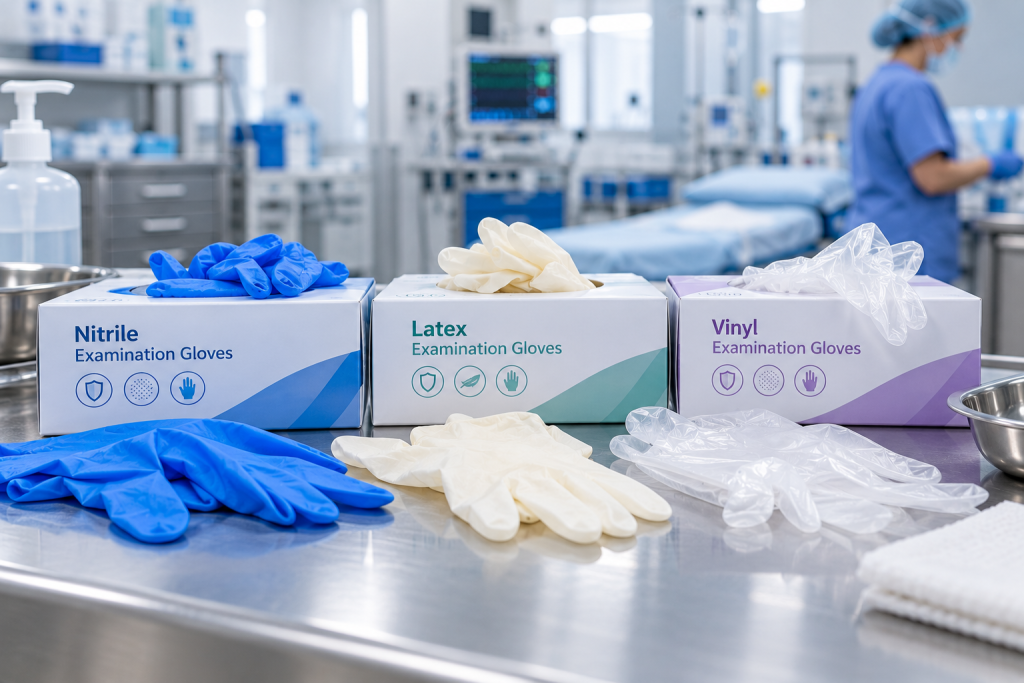
تُعد القفازات الطبية من أكثر المستلزمات ذات الاستخدام الواحد استهلاكًا في المستشفيات والعيادات والمختبرات ومراكز الأسنان وغيرها من المنشآت الصحية. ويساعد اختيار القفاز المناسب على دعم ممارسات مكافحة العدوى، وراحة العاملين، وكفاءة العمليات، والتخطيط الفعال للمشتريات.
ومع ذلك، لا تتمتع جميع القفازات الطبية بالخصائص نفسها. فهناك اختلافات بين قفازات النتريل واللاتكس والفينيل من حيث المادة والملاءمة والمتانة والحساسية ومدى مناسبتها للمهام المختلفة.
وتشير إرشادات مراكز مكافحة الأمراض والوقاية منها (CDC) إلى أن اختيار نوع القفاز للاستخدامات الطبية غير الجراحية يعتمد على عدة عوامل، منها طبيعة المهمة، والتعرض المتوقع للمواد الكيميائية، والحساسية تجاه اللاتكس، والمقاس، وسياسات المنشأة.
لذلك، لا ينبغي أن يقتصر هدف فرق المشتريات على العثور على القفاز الأقل سعرًا، بل يجب تحديد المنتجات المناسبة للاستخدام المقصود مع مراعاة الجودة واستمرارية التوريد واحتياجات العاملين والمتطلبات ذات الصلة.
1. قفازات النتريل الطبية
تُصنع قفازات النتريل من المطاط الصناعي، وتتوفر على نطاق واسع كقفازات فحص طبية ذات استخدام واحد.
ومن المزايا المهمة للنتريل من منظور المشتريات أنه لا يحتوي على اللاتكس الطبيعي، مما يجعله خيارًا يمكن النظر فيه عندما تحتاج المنشأة إلى تجنب التعرض للاتكس الطبيعي. وتوصي FDA باختيار قفازات مصنوعة من مواد صناعية بديلة عندما يعاني المستخدم أو المريض من حساسية تجاه اللاتكس الطبيعي.
كما يمكن أن توفر قفازات النتريل ملاءمة ومتانة جيدة للعديد من الاستخدامات الصحية. وتشير CDC إلى تفضيل النتريل أو اللاتكس على الفينيل في الإجراءات السريرية التي تحتاج إلى مهارة يدوية أو تتطلب تواصلًا مع المريض لفترة تتجاوز التفاعل القصير.
وعند شراء القفازات الطبية المصنوعة من النتريل، ينبغي أيضًا تقييم الاستخدام المقصود والمقاسات والمواصفات والجودة والمتطلبات المرتبطة بالمهمة.
2. قفازات اللاتكس الطبية
تُصنع قفازات اللاتكس من المطاط الطبيعي، وقد استُخدمت على نطاق واسع في القطاع الصحي لما تتميز به من ملاءمة ومرونة وخصائص لمسية.
وقد تكون مناسبة لبعض الأنشطة السريرية التي تتطلب مهارة يدوية عندما لا تكون حساسية اللاتكس الطبيعي مصدر قلق ويكون المنتج مناسبًا للإجراء المقصود.
ومع ذلك، تمثل حساسية اللاتكس عاملًا مهمًا يجب أخذه في الاعتبار. فقد يعاني بعض العاملين الصحيين والمرضى من تفاعلات تحسسية تجاه المطاط الطبيعي. وتوصي FDA باستخدام مواد صناعية بديلة عندما توجد حساسية معروفة تجاه اللاتكس الطبيعي.
لذلك، ينبغي للمنشآت التي تشتري القفازات الطبية المصنوعة من اللاتكس مراعاة سياسات المنشأة واحتياجات العاملين والمرضى والاستخدام المقصود.
3. قفازات الفينيل الطبية
تُصنع قفازات الفينيل عادةً من مادة البولي فينيل كلوريد (PVC)، وتتوفر قفازات فينيل طبية للاستخدام في بعض التطبيقات الصحية.
وقد يكون الفينيل مناسبًا لبعض المهام بناءً على تقييم المخاطر والاستخدام المقصود، لكن ينبغي عدم افتراض أن جميع مواد القفازات ذات الاستخدام الواحد تقدم مستوى الأداء نفسه.
وتشير إرشادات CDC إلى أن قفازات الفينيل سجلت معدلات فشل أعلى من اللاتكس أو النتريل في الاختبارات السريرية والمحاكاة، ولذلك تفضل النتريل أو اللاتكس للإجراءات السريرية التي تتطلب مهارة يدوية أو أكثر من تواصل قصير مع المريض.
وهذا يجعل تقييم المهمة عاملًا مهمًا عند تحديد استخدام قفازات الفينيل داخل المنشأة الصحية.
4. اختيار القفاز حسب المهمة السريرية
بدلًا من اختيار مادة واحدة لجميع الأقسام، ينبغي للمنشأة تقييم طبيعة المهام التي يتم تنفيذها في كل منطقة.
توصي CDC باستخدام القفازات عندما يكون من المتوقع بشكل معقول حدوث ملامسة للدم أو المواد التي يحتمل أن تكون معدية أو الأغشية المخاطية أو الجلد غير السليم أو المعدات الملوثة، مع اختيار القفازات ذات الملاءمة والمتانة المناسبة للمهمة.
ومن منظور المشتريات، يعني ذلك أهمية التنسيق مع الفرق السريرية ومكافحة العدوى والسلامة المهنية وغيرها من الجهات المختصة عند تحديد المنتجات.
وينبغي أن تبدأ استراتيجية شراء القفازات الطبية من الاستخدام الفعلي وليس من المادة أو السعر فقط.
5. مراعاة المقاس والملاءمة وراحة العاملين
يمكن أن يؤثر مقاس القفاز ومدى ملاءمته على الراحة وسهولة الاستخدام.
وغالبًا ما تحتاج المنشآت الصحية إلى توفير عدة مقاسات لتناسب مختلف المستخدمين. وتشير إرشادات CDC إلى أنه قد يكون من الضروري توفير القفازات بعدة مقاسات.
فالقفاز الضيق للغاية قد يسبب عدم الراحة، بينما يمكن أن يؤثر القفاز الواسع على المهارة اليدوية.
لذلك، ينبغي مراعاة توفر المقاسات عند تقييم المنتجات والموردين، خصوصًا بالنسبة إلى القفازات الطبية التي يستخدمها العاملون بشكل متكرر خلال اليوم.
6. مراجعة الجودة والمستندات والمتطلبات التنظيمية
لا ينبغي أن يكون السعر العامل الوحيد المستخدم عند مقارنة القفازات.
ينبغي لفرق المشتريات مراجعة المواصفات والمستندات ذات الصلة قبل اعتماد المنتجات للاستخدام.
وتقيّم FDA القفازات الطبية وفق معايير تشمل مقاومة التسرب وبعض الخصائص الفيزيائية والتوافق الحيوي، كما تشير إرشاداتها إلى معايير مختلفة لقفازات الفحص المصنوعة من اللاتكس والفينيل والنتريل.
وبالنسبة للمنشآت التي تشتري القفازات الطبية في السعودية، ينبغي أيضًا مراعاة المتطلبات التنظيمية السعودية ذات الصلة. ويمكن الرجوع إلى الهيئة العامة للغذاء والدواء السعودية للحصول على المعلومات الرسمية المتعلقة بالأجهزة والمنتجات الطبية.
7. التخطيط للمخزون وفقًا للاستهلاك والتوفر
تُعد القفازات من المنتجات عالية الاستهلاك في العديد من البيئات الصحية، ولذلك يمثل التخطيط للمخزون عاملًا مهمًا.
يمكن لفرق المشتريات مراجعة بيانات الاستهلاك السابقة بحسب القسم ونوع القفاز والمقاس، ثم تحديد المنتجات الأكثر استخدامًا ووضع مستويات مناسبة للحد الأدنى ونقاط إعادة الطلب.
كما ينبغي مراعاة التغيرات في أعداد المرضى، والتوسع في الخدمات، والطلب الموسمي، وفترات التوريد، واحتمالية حدوث اضطرابات في سلسلة الإمداد.
ويمكن للمنشآت التي تحتاج إلى القفازات الطبية الاطلاع أيضًا على المستلزمات والمستهلكات الطبية لدى ربيعة الطبية عند مراجعة حلول توريد المستلزمات الطبية.
8. مقارنة القيمة الإجمالية وليس سعر العبوة فقط
لا يعني أقل سعر للوحدة بالضرورة تحقيق أفضل قيمة للمشتريات.
ينبغي للمنشآت الصحية النظر إلى ملاءمة المنتج، والجودة، ورضا المستخدمين، وتوفر المقاسات، والمستندات، وموثوقية المورد، وفترة التوريد، واستمرارية توفر المنتج.
وقد تكون وفورات السعر محدودة القيمة إذا كان المنتج غير مناسب للمهمة المطلوبة أو يعاني من عدم استمرارية التوفر.
وبالنسبة للمنتجات عالية الاستهلاك مثل القفازات الطبية، يمكن أن تكون موثوقية المورد عاملًا مهمًا في الحد من الضغط الناتج عن النقص أو طلبات الشراء العاجلة.
النتريل أم اللاتكس أم الفينيل؟
لا توجد مادة واحدة ينبغي اختيارها تلقائيًا لجميع الأنشطة الصحية.
يوفر النتريل خيارًا صناعيًا خاليًا من اللاتكس الطبيعي ويمكن أن يناسب العديد من الاستخدامات السريرية. ويوفر اللاتكس ملاءمة ومرونة ومهارة لمسية جيدة، لكن ينبغي مراعاة حساسية المطاط الطبيعي. أما الفينيل فقد يكون مناسبًا لبعض المهام، إلا أن إرشادات CDC تشير إلى معدلات فشل أعلى مقارنة بالنتريل واللاتكس وتفضل الأخيرين للإجراءات التي تحتاج إلى مهارة يدوية أو تتجاوز التفاعل القصير مع المريض.
لذلك، ينبغي تحديد الخيار المناسب بناءً على المهمة المقصودة، وتقييم المخاطر، وسياسات المنشأة، وتعليمات الشركة المصنعة، والمتطلبات ذات الصلة، ورأي الفرق السريرية ومكافحة العدوى المختصة.
الرابية الطبية ودعم مشتريات المنشآت الصحية
في الرابية الطبية، ندرك أهمية الوصول المستمر إلى المستلزمات والمستهلكات الطبية التي تحتاج إليها المنشآت الصحية في عملياتها اليومية.
وقد تستهلك المستشفيات والعيادات والمختبرات ومراكز الأسنان كميات كبيرة من القفازات الطبية، مما يجعل استمرارية توفر المنتجات وكفاءة المشتريات من العوامل المهمة.
ويرتكز نهجنا على فهم احتياجات المنشآت الصحية ودعم فرق المشتريات من خلال حلول احترافية لتوريد وتوزيع المستلزمات الطبية.
وبالنسبة للمنشآت التي تبحث عن القفازات الطبية في السعودية، ينبغي أن تجمع استراتيجية المشتريات الفعالة بين اختيار المنتج المناسب والجودة وتوفر المخزون والتخطيط وموثوقية التوزيع.
وفي النهاية، ينبغي أن يعتمد الاختيار بين النتريل واللاتكس والفينيل على متطلبات المهمة والمنشأة وليس على المادة أو السعر وحدهما.
Medical Gloves are among the most frequently used disposable supplies in hospitals, clinics, laboratories, dental centers, and other healthcare facilities. Selecting the appropriate glove is important for infection-control practices, staff comfort, operational efficiency, and procurement planning.
However, not all Medical Gloves offer identical characteristics. Nitrile, latex, and vinyl gloves differ in material, fit, durability, sensitivity considerations, and suitability for different tasks. The CDC notes that glove selection for non-surgical healthcare use should consider the task, anticipated chemical exposure, latex sensitivity, sizing, and facility policies.
For healthcare procurement teams, the objective is therefore not simply to identify the lowest-cost glove. Facilities should determine which glove types are appropriate for their intended applications while considering quality, supply continuity, staff requirements, and applicable standards.
This buying guide examines the key differences between nitrile, latex, and vinyl gloves and outlines eight factors healthcare facilities should consider when purchasing them.
1. Nitrile Medical Gloves
Nitrile gloves are manufactured from synthetic rubber and are widely available as disposable medical examination gloves.
One significant procurement advantage is that nitrile does not contain natural rubber latex, making it an option when facilities need to avoid natural rubber latex exposure. The FDA advises selecting gloves made from alternative synthetic materials when the wearer or patient has a natural rubber latex allergy.
Nitrile gloves can provide good fit and durability for many healthcare applications. The CDC notes that either latex or nitrile is preferable to vinyl for clinical procedures requiring manual dexterity or more than brief patient contact because vinyl has demonstrated higher failure rates in simulated and actual clinical conditions.
When purchasing nitrile Medical Gloves, procurement teams should still evaluate the specific product’s intended use, sizing, quality specifications, relevant certifications, and compatibility with the task being performed.
2. Latex Medical Gloves
Latex gloves are manufactured using natural rubber latex and have traditionally been used in healthcare because of their fit, flexibility, and tactile characteristics.
For clinical activities requiring manual dexterity, latex can remain an appropriate option when natural rubber latex sensitivity is not a concern and the product is suitable for the intended procedure.
However, latex sensitivity is an important procurement consideration. Some healthcare professionals and patients can experience allergic reactions to natural rubber latex. The FDA therefore recommends choosing alternative synthetic materials when a wearer or patient has a natural rubber latex allergy.
Healthcare organizations purchasing latex Medical Gloves should therefore consider their facility’s policies, staff requirements, patient population, and intended applications.
3. Vinyl Medical Gloves
Vinyl gloves are generally manufactured from polyvinyl chloride (PVC). Like nitrile and latex examination gloves, medical-grade vinyl gloves are available for healthcare applications.
Vinyl may be considered for certain tasks depending on the facility’s risk assessment and intended use. However, healthcare organizations should not assume that all disposable glove materials perform identically.
CDC guidance states that vinyl gloves have demonstrated higher failure rates than latex or nitrile under simulated and actual clinical conditions. The CDC consequently identifies latex or nitrile as preferable for clinical procedures requiring manual dexterity or involving more than brief patient contact.
This makes task assessment particularly important when deciding where vinyl Medical Gloves should be used within a healthcare organization.
4. Compare Gloves According to the Clinical Task
Instead of selecting one glove material for every department, healthcare organizations should evaluate the tasks performed in different areas of the facility.
The CDC recommends wearing gloves when contact with blood or other potentially infectious materials, mucous membranes, non-intact skin, potentially contaminated skin, or contaminated equipment can reasonably be anticipated. It also recommends selecting gloves with fit and durability appropriate to the task.
For procurement teams, this means glove selection should involve input from clinical, infection-control, occupational safety, and other relevant departments.
The requirements of an examination room, laboratory, environmental cleaning team, dental clinic, or other clinical department may differ.
A structured purchasing strategy for Medical Gloves should therefore begin with intended use rather than material or price alone.
5. Consider Fit, Size and Staff Comfort
Glove fit can affect both comfort and functionality.
Healthcare facilities often require several sizes to accommodate different users. CDC guidance specifically notes that it may be necessary for facilities to stock gloves in several sizes.
A glove that is too tight may be uncomfortable during extended tasks, while an oversized glove may interfere with dexterity.
Procurement teams should therefore consider size availability when evaluating suppliers and products. Feedback from healthcare professionals can also help determine whether a particular product is appropriate for routine use.
For frequently used Medical Gloves, small differences in fit and usability can become significant when staff members wear multiple pairs throughout a working day.
6. Review Quality, Documentation and Regulatory Requirements
Price should not be the only factor used to compare medical gloves.
Medical gloves are protective products, and healthcare procurement teams should review the relevant product specifications and documentation before purchasing.
The FDA, for example, evaluates medical gloves against criteria that include leak resistance, certain physical properties, and biocompatibility. Its medical-glove guidance also references material-specific standards for latex, vinyl, and nitrile examination gloves.
For healthcare facilities purchasing Medical Gloves in Saudi Arabia, applicable Saudi regulatory requirements should also be considered. Organizations can consult the Saudi Food and Drug Authority (SFDA) for official information relating to medical devices and products.
Procurement teams should request appropriate documentation from suppliers where required and ensure that products are suitable for their intended healthcare application.
7. Plan Inventory Around Consumption and Availability
Medical gloves are high-consumption products in many healthcare environments, which makes inventory planning particularly important.
Procurement teams can review historical consumption by department, glove type, and size to identify frequently used products and establish appropriate minimum stock and reorder levels.
Facilities should also consider changes in patient volume, service expansion, seasonal demand, supplier lead times, and possible supply-chain disruptions.
The CDC maintains specific strategies for conserving disposable medical gloves during periods of increased demand or supply disruption, illustrating why supply continuity should form part of healthcare inventory planning.
Healthcare organizations sourcing Medical Gloves can also review Rabiyah Medical’s medical supplies and consumables when considering medical supply solutions for their facilities.
8. Compare Total Procurement Value, Not Only Price Per Box
The lowest unit price does not necessarily represent the best procurement value.
Healthcare facilities should consider several factors together: product suitability, quality, staff acceptance, available sizes, documentation, supplier reliability, lead times, and consistency of supply.
A slightly lower purchase price may provide limited benefit if a product is unsuitable for the intended task or frequently unavailable.
For high-consumption products such as Medical Gloves, supplier reliability can be particularly important because even relatively short supply interruptions may create additional pressure on procurement teams.
A long-term purchasing strategy should therefore balance cost control with product suitability and continuity of supply.
Nitrile vs. Latex vs. Vinyl: What Should Healthcare Facilities Consider?
There is no single glove material that should automatically be selected for every healthcare activity.
Nitrile provides a synthetic, latex-free option and can be suitable for many clinical applications. Latex can provide good fit, flexibility, and dexterity but requires consideration of natural rubber latex sensitivity. Vinyl may be appropriate for selected tasks, but CDC guidance notes higher failure rates than latex or nitrile and favors latex or nitrile for clinical procedures requiring dexterity or more than brief patient contact.
The appropriate choice should therefore be determined by the intended task, facility policies, risk assessment, applicable requirements, manufacturer information, and input from qualified clinical and infection-control teams.
Rabiyah Medical: Supporting Healthcare Procurement
At Rabiyah Medical, we understand that healthcare facilities require dependable access to frequently used medical supplies and consumables.
Hospitals, clinics, laboratories, dental centers, and other healthcare organizations may consume large quantities of Medical Gloves, making consistent product availability and efficient procurement particularly important.
Our approach focuses on understanding healthcare organizations’ supply requirements and supporting procurement teams through professional medical supply and distribution solutions.
For healthcare organizations sourcing Medical Gloves in Saudi Arabia, an effective procurement strategy should combine appropriate product selection, quality, reliable availability, inventory planning, and a dependable distribution relationship.
Choosing between nitrile, latex, and vinyl should ultimately be based on the requirements of the task and facility rather than material or price alone.