
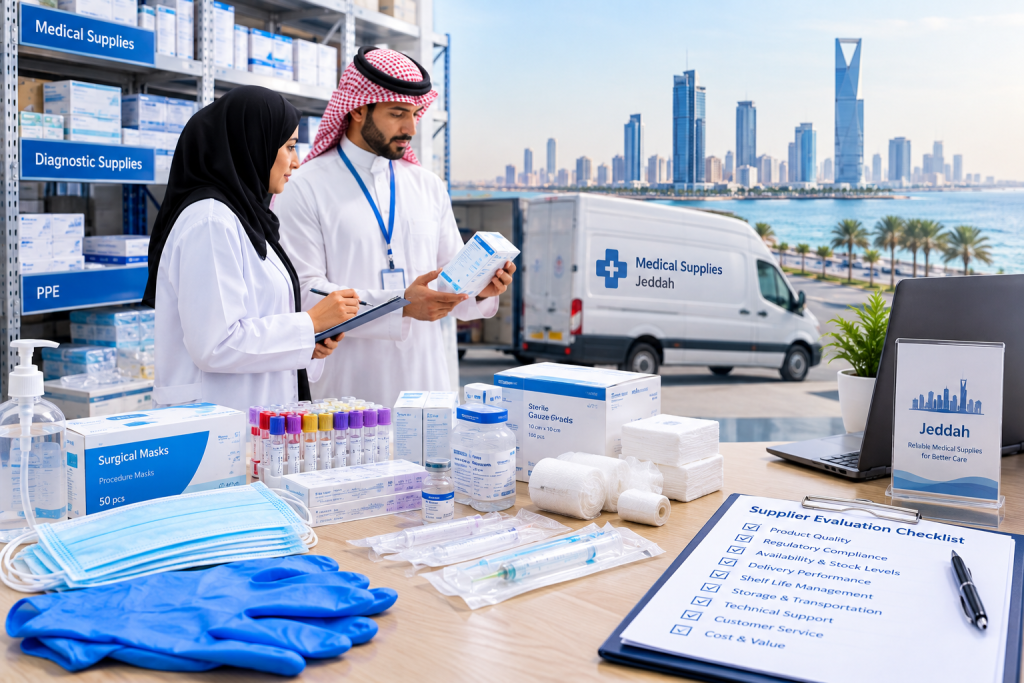
تُعد المستلزمات الطبية في جدة جزءًا أساسيًا من العمليات اليومية للمستشفيات والعيادات والمراكز التشخيصية والصيدليات وغيرها من المنشآت الصحية. بدءًا من المستلزمات الاستهلاكية الأساسية ومنتجات مكافحة العدوى، وصولًا إلى المستلزمات التشخيصية والأجهزة الطبية، تعتمد المنشآت الصحية على سلسلة توريد موثوقة للحفاظ على استمرارية الرعاية الصحية والجاهزية التشغيلية.
تُعد جدة مركزًا صحيًا مهمًا في المملكة العربية السعودية، وتحتاج المنشآت الصحية فيها إلى مجموعة واسعة من المنتجات والخدمات لدعم مختلف التخصصات الطبية. كما سلطت أنشطة وزارة الصحة الأخيرة في جدة الضوء على أهمية جاهزية المنشآت، والجودة، وسلامة المرضى، وكفاءة العمليات الصحية.
لذلك، فإن اختيار مورد مستلزمات طبية محلي للمستشفيات والعيادات لا يتعلق فقط بالعثور على أسعار تنافسية. بل ينبغي أن يكون المورد المناسب قادرًا على توفير المنتجات الملائمة، والتسليم الموثوق، والامتثال للمتطلبات التنظيمية، والخدمة السريعة، واستمرارية التوريد.
لماذا يُعد اختيار مورد المستلزمات الطبية المناسب أمرًا مهمًا؟
لا تستطيع المنشآت الصحية دائمًا تحمل التأخير في استلام المستلزمات الأساسية. فقد يؤدي نقص أحد المستلزمات الاستهلاكية المستخدمة بشكل متكرر إلى تعطيل الإجراءات الروتينية، بينما قد يؤثر تأخر جهاز طبي أو منتج متخصص في جدولة المواعيد والتخطيط التشغيلي.
يمكن للمورد الموثوق مساعدة المنشآت الصحية على:
- الحفاظ على مستويات مخزون مناسبة.
- تقليل مخاطر نفاد المخزون.
- تحسين تخطيط المشتريات.
- استلام المنتجات ضمن المواعيد المتوقعة.
- الوصول إلى المنتجات والمعدات الطبية المناسبة.
- التعامل مع احتياجات التوريد العاجلة.
- تحسين وضوح ومتابعة مستويات المخزون.
- دعم استمرارية رعاية المرضى.
ولا ينبغي أن يكون الهدف مجرد العثور على المورد الأقل سعرًا، بل بناء علاقة توريد تدعم المتطلبات التشغيلية والسريرية للمنشأة.
ما الذي يجب أن تبحث عنه المستشفيات والعيادات لدى مورد المستلزمات الطبية في جدة؟
تختلف متطلبات المشتريات من منشأة صحية إلى أخرى، إلا أن هناك عدة عوامل ينبغي أخذها بعين الاعتبار عند تقييم المورد المحلي.
1. تنوع المنتجات وتوافرها
ينبغي أن يكون المورد قادرًا على توفير فئات المنتجات التي تستخدمها المنشأة بشكل منتظم.
وقد تشمل هذه المنتجات:
- المستلزمات الطبية الاستهلاكية.
- مستلزمات العناية بالجروح.
- منتجات مكافحة العدوى.
- معدات الوقاية الشخصية.
- مستلزمات المختبرات.
- المنتجات التشخيصية.
- الحقن والإبر.
- مستلزمات إعطاء المحاليل الوريدية.
- منتجات رعاية المرضى.
- المعدات والأجهزة الطبية.
- منتجات التنظيف والتطهير.
يمكن أن يساعد تنوع المنتجات في تبسيط عملية الشراء من خلال تقليل الحاجة إلى التنسيق مع عدة موردين.
ومع ذلك، فإن تنوع المنتجات وحده لا يكفي؛ إذ ينبغي للمنشآت أيضًا تقييم مدى توافر المنتجات فعليًا وقدرة المورد على الحفاظ على مستويات مخزون مستقرة.
2. الامتثال للمتطلبات التنظيمية
يجب أن يكون الامتثال للمتطلبات التنظيمية من أولى الاعتبارات عند اختيار مورد للأجهزة والمستلزمات الطبية في المملكة العربية السعودية.
تتطلب الهيئة العامة للغذاء والدواء (SFDA) تسجيل وترخيص المنشآت التي تمارس الأنشطة المشمولة بنظام الأجهزة والمستلزمات الطبية. كما توفر الهيئة متطلبات ترخيص محددة للمنشآت العاملة في مجال الأجهزة الطبية، بما في ذلك المستوردين والموزعين.
لذلك، ينبغي للمنشآت الصحية التحقق من حالة الترخيص ذات الصلة لدى المورد، والتأكد من أن المنتجات مصرح بها بشكل مناسب في السوق السعودي، حيثما ينطبق ذلك.
كما توفر الهيئة العامة للغذاء والدواء قائمة قابلة للبحث بالمنشآت المرخصة، ويمكن استخدامها كجزء من عملية التحقق من المورد.
3. جودة المنتجات والوثائق
ينبغي أن تتمتع المنشآت الصحية بالثقة في جودة المنتجات التي تشتريها وإمكانية تتبعها.
وبحسب فئة المنتج، قد تحتاج فرق المشتريات إلى مراجعة:
- مواصفات المنتج.
- معلومات الشركة المصنعة.
- الوثائق التنظيمية.
- تسجيل المنتج أو تصريح تسويقه، حيثما ينطبق ذلك.
- الشهادات ووثائق الجودة.
- معلومات رقم التشغيلة أو الدفعة.
- تواريخ انتهاء الصلاحية.
- تعليمات الاستخدام.
تسهم الوثائق الجيدة في تسهيل عملية التحقق من المنتجات، والحفاظ على السجلات الداخلية المناسبة.
4. سرعة التوصيل والتوافر المحلي
من مزايا التعامل مع مورد في جدة إمكانية الحصول على أوقات توصيل أقصر وسهولة أكبر في التواصل.
قد يتمكن الموردون المحليون من دعم المنشآت من خلال:
- عمليات التوصيل المجدولة بانتظام.
- إعادة التوريد بشكل أسرع.
- الطلبات العاجلة.
- تنسيق عمليات التوصيل المحلية.
- سهولة التواصل مع فرق المشتريات.
- فهم أفضل للمتطلبات التشغيلية المحلية.
ومع ذلك، فإن وجود المورد في المدينة نفسها لا يضمن تلقائيًا تقديم خدمة موثوقة. لذلك ينبغي للمستشفيات والعيادات تقييم أداء التوصيل الفعلي للمورد بدلًا من الاعتماد على القرب الجغرافي فقط.
5. دعم إدارة المخزون ومستويات التوريد
ينبغي للمورد القوي أن يدرك أن توريد المستلزمات الطبية يتجاوز مجرد تقديم الطلب واستلام الشحنة.
وقد تستفيد المنشآت من الموردين القادرين على دعم:
- إعادة التوريد المنتظمة.
- الشراء بناءً على التوقعات.
- تحديد الحد الأدنى والأقصى لمستويات المخزون.
- إدارة تواريخ انتهاء الصلاحية.
- متابعة توافر المنتجات.
- تلبية الاحتياجات الطارئة.
- جداول التوريد المتكررة.
ويمكن أن يكون ذلك ذا قيمة خاصة للمنتجات ذات معدلات الاستهلاك المرتفعة أو الأهمية التشغيلية الحرجة.
6. مدة صلاحية المنتجات وإدارة انتهاء الصلاحية
ينبغي للمنشآت الصحية الانتباه إلى مدة الصلاحية المتبقية للمنتجات عند استلام المستلزمات الطبية.
ويكتسب ذلك أهمية خاصة بالنسبة إلى:
- الكواشف المخبرية.
- المستلزمات الطبية المعقمة.
- المطهرات.
- المنتجات التشخيصية.
- بعض مستلزمات العناية بالجروح.
- المنتجات الأخرى ذات مدة الصلاحية المحدودة.
ينبغي أن يمتلك المورد ممارسات مناسبة لتدوير المخزون، وأن يوفر منتجات ذات مدة صلاحية متبقية مناسبة لمعدل استهلاك المنشأة المتوقع.
ويساعد ذلك على تقليل الهدر ومنع المنشآت الصحية من استلام منتجات قد تنتهي صلاحيتها قبل استخدامها.
7. ظروف التخزين والنقل
تتطلب بعض المستلزمات الطبية ظروفًا بيئية محددة أثناء التخزين والنقل.
وبحسب طبيعة المنتج، قد تشمل هذه المتطلبات ما يتعلق بـ:
- درجة الحرارة.
- الرطوبة.
- الحماية من الضوء.
- سلامة العبوة.
- نظافة ظروف النقل.
- إجراءات المناولة والتعامل مع المنتجات.
ينبغي للمنشآت أن تسأل الموردين عن كيفية تخزين المنتجات ونقلها، خصوصًا عند شراء المنتجات الطبية الحساسة لدرجة الحرارة أو غيرها من المنتجات الحساسة.
تُعد المناولة المناسبة أمرًا مهمًا، لأن جودة المنتج قد تتأثر في حال عدم الحفاظ على ظروف التخزين أو النقل المطلوبة.
8. الدعم الفني وخدمات ما بعد البيع
بالنسبة إلى الأجهزة والمعدات الطبية، لا تنتهي عملية الشراء بالضرورة عند تسليم المنتج.
قد تحتاج المنشآت الصحية إلى:
- دعم التركيب.
- تدريب المستخدمين.
- المساعدة الفنية.
- الصيانة الوقائية.
- الإصلاحات.
- قطع الغيار.
- دعم الضمان.
وتؤكد متطلبات الهيئة العامة للغذاء والدواء المتعلقة بالاستخدام الآمن للأجهزة الطبية داخل المنشآت الصحية أهمية وجود عمليات مناسبة تحيط باستخدام الأجهزة الطبية وسلامتها.
ولهذا السبب، ينبغي للمستشفيات والعيادات تقييم قدرة المورد على تقديم الدعم الفني المستمر عند اختيار المعدات والأجهزة الطبية.
9. القدرة على التعامل مع الطلبات العاجلة
لا تسير العمليات الصحية دائمًا وفق جداول شراء يمكن التنبؤ بها. فقد تؤدي الزيادة غير المتوقعة في أعداد المرضى، أو مشكلات المعدات، أو حالات النقص المفاجئة إلى ظهور احتياجات عاجلة للشراء.
قبل اختيار المورد، ينبغي للمنشآت معرفة:
- ما إذا كان المورد يقبل الطلبات العاجلة.
- خيارات التوصيل المتاحة.
- أوقات الاستجابة.
- قنوات التواصل.
- مدى توافر المنتجات الأساسية.
- الإجراءات المتبعة للطلبات الطارئة.
ويمكن أن يساعد وجود إجراء واضح ومحدد في تقليل حالة عدم اليقين عند الحاجة إلى مستلزمات عاجلة.
10. التواصل وخدمة العملاء
يمكن أن يكون للتواصل تأثير كبير على عملية المشتريات.
ينبغي للمورد الموثوق توفير معلومات واضحة بشأن:
- توافر المنتجات.
- الأسعار وعروض الأسعار.
- مواعيد التسليم المتوقعة.
- المنتجات المؤجلة أو غير المتاحة حاليًا.
- المنتجات البديلة.
- التغيرات في مستوى التوافر.
- الوثائق.
- الشكاوى أو مشكلات المنتجات.
يسمح التواصل المستمر لفرق المشتريات باتخاذ القرارات في وقت مبكر بدلًا من اكتشاف مشكلات التوريد بعد تقديم الطلب بالفعل.
كيف يمكن للمستشفيات مقارنة موردي المستلزمات الطبية؟
يمكن للمنشآت الصحية إنشاء عملية موحدة لتقييم الموردين بدلًا من اختيار الموردين بناءً على السعر فقط.
وقد تشمل المقارنة:
| العامل | ما يجب تقييمه |
|---|---|
| تنوع المنتجات | توافر فئات المنتجات المطلوبة |
| الجودة | مواصفات المنتجات وثبات الجودة |
| الامتثال | التراخيص والمتطلبات التنظيمية ذات الصلة |
| التوافر | مستويات المخزون واستمرارية التوريد |
| التوصيل | السرعة والموثوقية |
| مدة الصلاحية | الفترة المتبقية حتى انتهاء الصلاحية |
| التخزين | المناولة والنقل المناسبان |
| الدعم الفني | التركيب والصيانة والمساعدة |
| خدمة العملاء | التواصل وسرعة الاستجابة |
| الأسعار | التكلفة الإجمالية للمشتريات |
| الدعم الطارئ | القدرة على تلبية الاحتياجات العاجلة |
يوفر هذا النهج لفرق المشتريات صورة أكثر شمولًا عن أداء المورد.
أسئلة يجب طرحها قبل اختيار مورد محلي
قبل بدء علاقة توريد طويلة الأمد، يمكن للمستشفيات والعيادات طرح الأسئلة التالية على الموردين المحتملين:
- هل لديكم التراخيص المناسبة للأنشطة التي تمارسونها؟
- ما فئات المنتجات التي توفرونها؟
- ما متوسط مدة التوصيل المعتادة لديكم في جدة؟
- هل تحتفظون بمخزون محلي؟
- كيف تديرون تواريخ انتهاء صلاحية المنتجات؟
- ما إجراءات التخزين والنقل المتبعة لديكم؟
- هل يمكنكم دعم الطلبات العاجلة؟
- هل توفرون دعمًا فنيًا للأجهزة الطبية؟
- ما الوثائق المتاحة للمنتجات التي يتم توريدها؟
- كيف تتعاملون مع شكاوى المنتجات أو عمليات الإرجاع؟
- هل يمكنكم توفير ترتيبات توريد متكررة؟
يمكن أن تساعد الإجابات الواضحة عن هذه الأسئلة فرق المشتريات على تحديد الموردين الذين تتوافق خدماتهم بشكل أفضل مع المتطلبات التشغيلية للمنشأة.
لماذا يمكن أن تضيف علاقات التوريد المحلية قيمة؟
يمكن للمورد المحلي أن يقدم أكثر من مجرد ميزة القرب الجغرافي. فعندما يكون المورد على دراية ببيئة الرعاية الصحية المحلية ويطور علاقة مستمرة مع المنشأة، يمكن أن تصبح عملية المشتريات أكثر قابلية للتنبؤ والتنظيم.
يمكن أن يدعم التعاون طويل الأمد:
- تحسين التنبؤ بالطلب.
- توفير أكثر استقرارًا للمنتجات.
- سرعة أكبر في التواصل.
- سهولة تنسيق عمليات التوصيل.
- فهمًا أفضل لاحتياجات المنشأة.
- كفاءة أكبر في الطلبات المتكررة.
- استجابة أفضل للاحتياجات العاجلة.
ومع ذلك، ينبغي النظر إلى الوجود المحلي إلى جانب الجودة والامتثال والتوافر وأداء الخدمة.
بناء استراتيجية طويلة الأمد لتوريد المستلزمات الطبية
ينبغي للمنشآت الصحية تجنب الاعتماد الكامل على عمليات الشراء التفاعلية التي تتم فقط عند ظهور الحاجة. وبدلًا من ذلك، يمكن لفرق المشتريات استخدام بيانات الاستهلاك السابقة والمتطلبات التشغيلية لبناء استراتيجية توريد أكثر تنظيمًا.
وقد تشمل هذه الاستراتيجية:
- تحديد المنتجات الأساسية والحرجة.
- متابعة اتجاهات الاستهلاك.
- تحديد نقاط إعادة الطلب.
- الحفاظ على مخزون أمان مناسب.
- مراجعة أداء الموردين.
- متابعة تواريخ انتهاء الصلاحية.
- تقييم موثوقية التوصيل.
- الحفاظ على موردين بديلين لبعض المنتجات الأساسية.
- مراجعة تكاليف المشتريات بشكل منتظم.
يمكن أن تساعد الاستراتيجية المنظمة المنشآت على تقليل حالات نفاد المخزون وكذلك المخزون غير الضروري.
قائمة التحقق من مورد المستلزمات الطبية للمستشفيات والعيادات
قبل اختيار مورد محلي في جدة، يمكن للمنشآت الصحية استخدام قائمة التحقق التالية:
- التحقق من التراخيص ذات الصلة بالمورد.
- مراجعة مجموعة المنتجات المتاحة.
- التأكد من جودة المنتجات والوثائق الخاصة بها.
- التحقق من توافر المنتجات.
- تقييم أوقات التوصيل.
- مراجعة ممارسات إدارة مدة الصلاحية.
- الاستفسار عن ظروف التخزين والنقل.
- تقييم الدعم الفني.
- التأكد من ترتيبات الضمان والصيانة، حيثما ينطبق ذلك.
- الاستفسار عن الطلبات العاجلة.
- مراجعة خدمة العملاء ووسائل التواصل.
- مقارنة التكاليف الإجمالية للمشتريات.
- متابعة أداء المورد بعد اختياره.
ينبغي أن يكون تقييم المورد عملية مستمرة وليست قرارًا يُتخذ مرة واحدة.
الخلاصة
يُعد اختيار مورد موثوق لـ المستلزمات الطبية في جدة جزءًا مهمًا من الحفاظ على كفاءة العمليات الصحية. فالمستشفيات والعيادات تحتاج إلى ما هو أكثر من الأسعار التنافسية؛ فهي تحتاج إلى موردين قادرين على توفير توافر مستمر للمنتجات، وجودة مناسبة، والامتثال للمتطلبات التنظيمية، وتوصيل موثوق، ودعم سريع وفعّال.
وينبغي أن تراعي عملية اختيار المورد مجموعة من المعايير، بما في ذلك تنوع المنتجات، والتراخيص، والوثائق، وتوافر المخزون، وإدارة انتهاء الصلاحية، وظروف التخزين والنقل، والدعم الفني، والخدمات الطارئة، والتواصل.
توفر الهيئة العامة للغذاء والدواء أطرًا للترخيص ومعلومات قابلة للبحث حول المنشآت المرخصة العاملة في مجال الأجهزة الطبية، مما يوفر للمنشآت الصحية نقطة بداية مهمة للتحقق من الموردين.
ومن خلال تقييم الموردين وفق معايير واضحة ومتابعة أدائهم مع مرور الوقت، يمكن للمنشآت الصحية بناء علاقات توريد أقوى، وتقليل اضطرابات التوريد، والحفاظ على المنتجات اللازمة لدعم رعاية المرضى بشكل آمن وفعّال.
والهدف ليس مجرد العثور على مورد في جدة، بل بناء شراكة موثوقة لتوريد المستلزمات الطبية تدعم الجودة والاستمرارية والامتثال والجاهزية.
Medical supplies in Jeddah are essential to the daily operations of hospitals, clinics, diagnostic centers, pharmacies, and other healthcare facilities. From basic consumables and infection control products to diagnostic supplies and medical devices, healthcare providers depend on a reliable supply chain to maintain continuity of care and operational readiness.
Jeddah is an important healthcare center in Saudi Arabia, with healthcare facilities requiring a wide range of products and services to support different medical specialties. Recent Ministry of Health activity in Jeddah has highlighted the importance of facility readiness, quality, patient safety, and efficient healthcare operations.
For hospitals and clinics, choosing a local medical supplies supplier is therefore about more than finding competitive prices. The right supplier should be able to provide appropriate products, reliable delivery, regulatory compliance, responsive service, and consistent supply.
Why Does Choosing the Right Medical Supplier Matter?
Healthcare facilities cannot always afford delays in receiving essential supplies. A shortage of a commonly used consumable can disrupt routine procedures, while a delayed medical device or specialized product may affect scheduling and operational planning.
A reliable supplier can help healthcare facilities:
- Maintain adequate inventory levels.
- Reduce the risk of stockouts.
- Improve procurement planning.
- Receive products within expected delivery times.
- Access appropriate medical products and equipment.
- Manage urgent supply requirements.
- Maintain better inventory visibility.
- Support continuity of patient care.
The objective should not simply be to find the cheapest supplier, but to establish a supply relationship that supports the facility’s operational and clinical requirements.
What Should Hospitals and Clinics Look for in a Jeddah Medical Supplies Supplier?
Different healthcare facilities have different procurement requirements. However, several factors should be considered when evaluating a local supplier.
1. Product Range and Availability
A supplier should be able to provide the categories of products that the facility uses regularly.
These may include:
- Medical consumables.
- Wound care supplies.
- Infection control products.
- Personal protective equipment.
- Laboratory supplies.
- Diagnostic products.
- Syringes and needles.
- IV administration supplies.
- Patient care products.
- Medical equipment and devices.
- Cleaning and disinfection products.
A broad product portfolio can simplify procurement by reducing the need to coordinate with multiple suppliers.
However, product range alone is not enough. Facilities should also evaluate actual product availability and the supplier’s ability to maintain consistent stock levels.
2. Regulatory Compliance
Regulatory compliance should be one of the first considerations when choosing a supplier of medical devices and supplies in Saudi Arabia.
The Saudi Food and Drug Authority (SFDA) requires establishments conducting activities covered by the Medical Devices and Supplies Law to be registered and licensed. The SFDA also provides specific licensing requirements for medical device establishments, including importers and distributors.
Healthcare facilities should therefore verify the supplier’s relevant licensing status and ensure that products are appropriately authorized for the Saudi market where applicable.
The SFDA also maintains a searchable list of licensed establishments, which can be used as part of supplier verification.
3. Product Quality and Documentation
Healthcare facilities should have confidence in the quality and traceability of the products they purchase.
Depending on the product category, procurement teams may need to review:
- Product specifications.
- Manufacturer information.
- Regulatory documentation.
- Product registration or marketing authorization where applicable.
- Certificates and quality documentation.
- Lot or batch information.
- Expiry dates.
- Instructions for use.
Good documentation makes it easier for healthcare facilities to verify products and maintain appropriate internal records.
4. Delivery Speed and Local Availability
One of the advantages of working with a supplier in Jeddah is the potential for shorter delivery times and easier communication.
Local suppliers may be able to support facilities with:
- Regular scheduled deliveries.
- Faster replenishment.
- Urgent orders.
- Local delivery coordination.
- Easier communication with procurement teams.
- Better understanding of local operational requirements.
However, being located in the same city does not automatically guarantee reliable service. Hospitals and clinics should evaluate actual delivery performance rather than relying solely on geographic proximity.
5. Inventory and Stock Management Support
A strong supplier should understand that healthcare procurement involves more than placing an order and receiving a shipment.
Facilities may benefit from suppliers that can support:
- Regular stock replenishment.
- Forecast-based purchasing.
- Minimum and maximum stock levels.
- Expiry-date management.
- Product availability monitoring.
- Emergency requirements.
- Recurring supply schedules.
This can be particularly valuable for products with high consumption rates or critical operational importance.
6. Product Shelf Life and Expiry Management
Healthcare facilities should pay attention to the remaining shelf life of products when receiving medical supplies.
This is particularly important for:
- Laboratory reagents.
- Sterile medical supplies.
- Disinfectants.
- Diagnostic products.
- Certain wound care products.
- Other products with limited shelf life.
A supplier should have appropriate inventory rotation practices and should provide products with a shelf life that is reasonable for the facility’s expected consumption.
This helps reduce waste and prevents healthcare facilities from receiving products that may expire before they can be used.
7. Storage and Transportation Conditions
Some medical supplies require specific environmental conditions during storage and transportation.
Depending on the product, these may include requirements related to:
- Temperature.
- Humidity.
- Protection from light.
- Packaging integrity.
- Clean transportation conditions.
- Handling procedures.
Facilities should ask suppliers how products are stored and transported, particularly when purchasing temperature-sensitive or otherwise sensitive medical products.
Appropriate handling is important because product quality can be affected if storage or transportation conditions are not maintained.
8. Technical Support and After-Sales Service
For medical devices and equipment, procurement does not necessarily end when the product is delivered.
Healthcare facilities may need:
- Installation support.
- User training.
- Technical assistance.
- Preventive maintenance.
- Repairs.
- Replacement parts.
- Warranty support.
The SFDA’s requirements for safe use of medical devices inside healthcare facilities reinforce the importance of appropriate processes surrounding medical device use and safety.
For this reason, hospitals and clinics should evaluate the supplier’s ability to provide ongoing technical support when selecting medical equipment and devices.
9. Ability to Handle Urgent Orders
Healthcare operations do not always follow predictable purchasing schedules. Unexpected increases in patient volume, equipment problems, or sudden shortages may create urgent procurement requirements.
Before selecting a supplier, facilities should understand:
- Whether urgent orders are accepted.
- Available delivery options.
- Response times.
- Communication channels.
- Availability of critical products.
- Procedures for emergency requests.
A clearly defined process can reduce uncertainty when urgent supplies are required.
10. Communication and Customer Service
Communication can have a major impact on the procurement process.
A reliable supplier should provide clear communication regarding:
- Product availability.
- Prices and quotations.
- Expected delivery dates.
- Backordered products.
- Product substitutions.
- Changes in availability.
- Documentation.
- Complaints or product issues.
Consistent communication allows procurement teams to make decisions earlier instead of discovering supply problems after an order has already been placed.
How Can Hospitals Compare Medical Suppliers?
Healthcare facilities can create a standardized supplier evaluation process instead of choosing suppliers based only on price.
A comparison may consider:
| Factor | What to Evaluate |
|---|---|
| Product range | Availability of required product categories |
| Quality | Product specifications and consistency |
| Compliance | Licensing and applicable regulatory requirements |
| Availability | Stock levels and continuity |
| Delivery | Speed and reliability |
| Shelf life | Remaining expiry period |
| Storage | Appropriate handling and transportation |
| Technical support | Installation, maintenance, and assistance |
| Customer service | Communication and responsiveness |
| Pricing | Overall procurement cost |
| Emergency support | Ability to handle urgent requirements |
This approach gives procurement teams a more complete picture of supplier performance.
Questions to Ask Before Choosing a Local Supplier
Before starting a long-term supply relationship, hospitals and clinics can ask potential suppliers:
- Are you appropriately licensed for the activities you perform?
- Which product categories do you supply?
- What is your typical delivery lead time in Jeddah?
- Do you maintain local inventory?
- How do you manage product expiry dates?
- What are your storage and transportation procedures?
- Can you support urgent orders?
- Do you provide technical support for medical devices?
- What documentation is available for supplied products?
- How do you handle product complaints or returns?
- Can you provide recurring supply arrangements?
Clear answers to these questions can help procurement teams identify suppliers that are better aligned with their operational requirements.
Why Local Supply Relationships Can Add Value
A local supplier can provide more than geographic convenience. When the supplier understands the local healthcare environment and develops an ongoing relationship with the facility, procurement can become more predictable.
Long-term collaboration can support:
- Better demand forecasting.
- More consistent availability.
- Faster communication.
- Easier delivery coordination.
- Improved understanding of facility requirements.
- More efficient recurring orders.
- Better response to urgent needs.
However, local presence should be considered alongside quality, compliance, availability, and service performance.
Building a Long-Term Medical Supply Strategy
Healthcare facilities should avoid relying entirely on reactive purchasing. Instead, procurement teams can use historical consumption data and operational requirements to build a more structured supply strategy.
This may include:
- Identifying critical products.
- Monitoring consumption trends.
- Establishing reorder points.
- Maintaining appropriate safety stock.
- Reviewing supplier performance.
- Monitoring expiry dates.
- Evaluating delivery reliability.
- Maintaining alternative suppliers for selected critical products.
- Reviewing procurement costs regularly.
A structured strategy can help facilities reduce both stockouts and unnecessary inventory.
Medical Supplies Supplier Checklist for Hospitals and Clinics
Before selecting a local supplier in Jeddah, healthcare facilities can use the following checklist:
- Verify the supplier’s relevant licensing.
- Review the available product range.
- Confirm product quality and documentation.
- Check product availability.
- Evaluate delivery times.
- Review shelf-life practices.
- Ask about storage and transportation conditions.
- Evaluate technical support.
- Confirm warranty and maintenance arrangements where applicable.
- Ask about urgent orders.
- Review customer service and communication.
- Compare overall procurement costs.
- Monitor supplier performance after selection.
Supplier evaluation should be an ongoing process rather than a one-time decision.
Conclusion
Choosing a reliable supplier for medical supplies in Jeddah is an important part of maintaining efficient healthcare operations. Hospitals and clinics need more than competitive prices; they need suppliers that can provide consistent availability, appropriate quality, regulatory compliance, reliable delivery, and responsive support.
A strong supplier selection process should consider product range, licensing, documentation, stock availability, expiry management, storage and transportation, technical support, emergency service, and communication.
The SFDA provides licensing frameworks and searchable information on licensed medical device establishments, giving healthcare facilities an important starting point for supplier verification.
By evaluating suppliers using clear criteria and monitoring their performance over time, healthcare facilities can build stronger procurement relationships, reduce supply disruptions, and maintain the products needed to support safe and efficient patient care.
The goal is not simply to find a supplier in Jeddah, but to establish a reliable medical supply partnership that supports quality, continuity, compliance, and readiness.